GST State Code List 2026: State-Wise GSTIN Codes, Jurisdiction & Uses
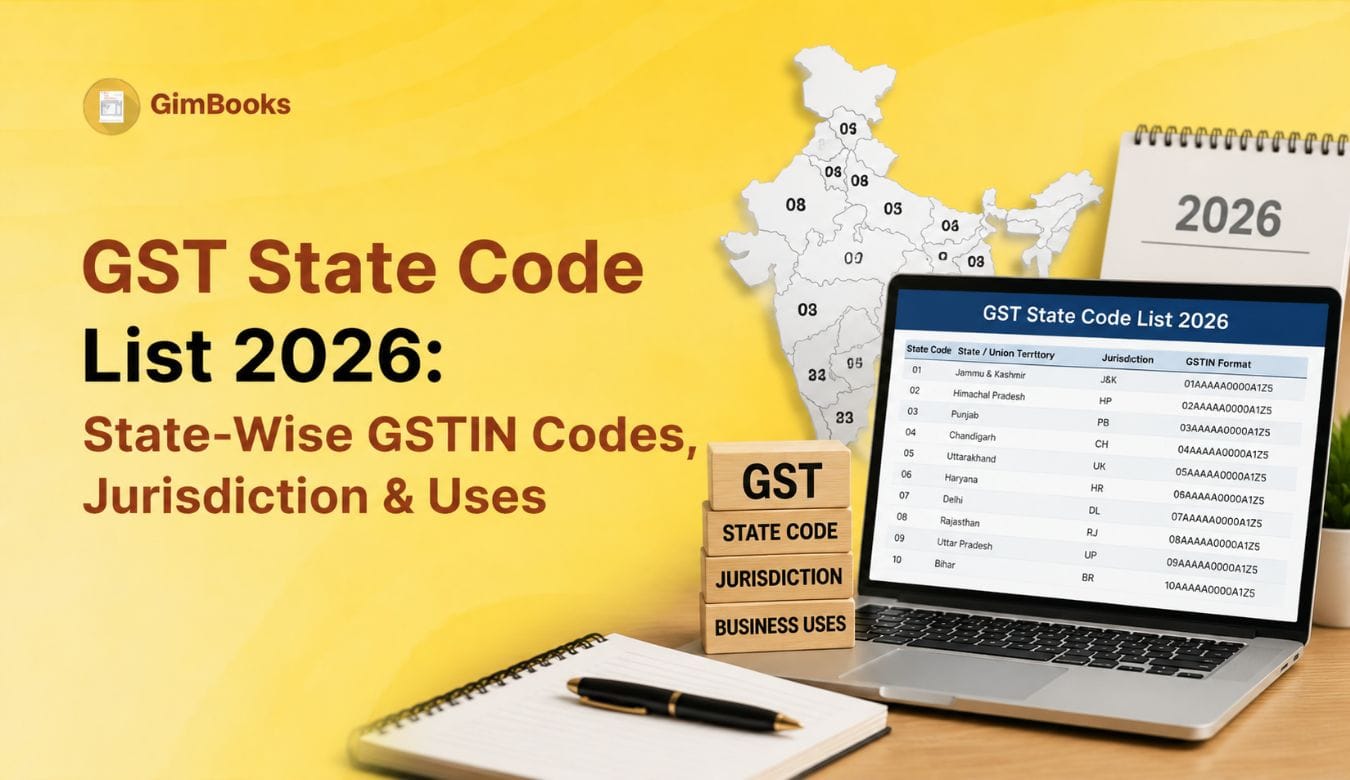
A GST state code is a two-digit numeric code assigned to every Indian state and union territory under GST. It appears as the first two digits of a GSTIN and helps identify the state or union territory where a business is registered.
For example:
If a GSTIN starts with 27, the business is registered in Maharashtra.If a GSTIN starts with 29, the business is registered in Karnataka.If a GSTIN starts with 07, the business is registered in Delhi.
The GST state code list is important for GST registration, invoices, e-invoicing, e-way bills, place of supply checks, GST returns and party master validation. A wrong state code can lead to GSTIN mismatch, wrong CGST/SGST or IGST treatment, IRP validation errors and e-way bill issues.
This guide gives the updated GST state code list for 2026, explains GST jurisdiction, shows how to read a GSTIN and provides practical checks for businesses using GST billing software.
What Is a GST State Code?
A GST state code is the first two digits of the GSTIN. It identifies the state or union territory where the taxpayer is registered.
A GSTIN is a 15-character identification number assigned to a GST-registered taxpayer. The state code is part of this GSTIN.
Example GSTIN:
27ABCDE1234F1Z5
So, when you see a GSTIN beginning with 27, you can immediately identify that the GST registration belongs to Maharashtra.
Complete GST State Code List 2026
Use this updated GST state code list for checking GSTINs, invoices, e-invoices, e-way bills and customer master data.
Important Notes on GST State Codes
Some state codes need special attention because they are common sources of confusion.
Businesses should not manually create or guess state codes. Always validate the state code from the GSTIN and the state selected in the invoice, e-invoice or e-way bill workflow.
Why GST State Code Is Important
GST state code is not just a reference number. It affects GST compliance, invoicing and reporting.
Incorrect state-code mapping can impact invoice tax treatment and GST reporting. Businesses should maintain accurate billing details by following a proper GST invoice compliance checklist before generating invoices.
GST state code is used for:
- GST registration
- GSTIN validation
- GST invoice creation
- E-invoice validation
- E-way bill generation
- Place of supply checks
- CGST/SGST vs IGST decision
- GSTR-1 and GSTR-3B reporting
- Customer and supplier master setup
- Branch-wise billing
- GST jurisdiction identification
- Taxpayer search and verification
For businesses using GimBooks GST billing software, correct GST state code mapping helps reduce invoice errors, e-invoice validation issues and e-way bill mismatches.
GST State Code and GSTIN: How They Are Connected
The GST state code is directly linked to GSTIN. The first two digits of GSTIN show the state or union territory where the business has GST registration.
Example:
If your customer says they are registered in Maharashtra, but their GSTIN starts with 29, that GSTIN belongs to Karnataka, not Maharashtra. In such cases, the billing team should confirm the correct GSTIN before creating the invoice.
GST State Code and Jurisdiction: What Is the Difference?
GST state code and GST jurisdiction are connected, but they are not the same.
For example, a taxpayer may have GSTIN starting with 27, which means Maharashtra. But their jurisdiction may be a specific division, range or office within Maharashtra.
So, the GST state code tells you the state of registration. GST jurisdiction tells you the tax office or authority responsible for that taxpayer.
How to Find GST Jurisdiction
GST jurisdiction can usually be checked from GST registration details, taxpayer records or the GST portal taxpayer search.
To find GST jurisdiction, check:
- GSTIN
- Legal name of business
- Principal place of business
- State
- PIN code
- Central jurisdiction
- State jurisdiction
- Registration certificate details
Businesses should verify GST jurisdiction when they are registering under GST, updating business address, handling notices or verifying customer/supplier GST records.
GST State Code Uses in GST Invoices
GST state code plays an important role while creating GST invoices.
A GST invoice should have the correct:
- Supplier GSTIN
- Buyer GSTIN
- Supplier state
- Buyer state
- Place of supply
- Billing address
- Shipping address
- CGST/SGST or IGST treatment
Businesses should also verify whether the selected GST type, tax calculation and invoice details are correct before issuing documents. Understanding common GST invoice errors and solutions can help prevent issues caused by incorrect GSTIN, state or tax details.
If the supplier and place of supply are in the same state, CGST and SGST usually apply. If they are in different states, IGST usually applies, depending on the transaction type and place-of-supply rules.
Example:
For invoice field accuracy, read GimBooks’ GST Invoice Mandatory Fields Audit Checklist.
GST State Code Uses in E-Invoicing
E-invoicing systems validate GSTIN, state code, place of supply and tax type. If the GST state code does not match the selected state or tax treatment, the invoice may fail validation.
State-code mismatch is one of the reasons for invoice validation failures during IRN generation. Businesses can also refer to e-invoice error codes and fixes to understand common validation issues and corrective actions.
Common e-invoice state code issues include:
For detailed troubleshooting, use GimBooks’ How to Fix E-Invoice PIN Code and State Code Validation Errors.
GST State Code Uses in E-Way Bills
E-way bills also depend on correct state, PIN code, GSTIN and delivery address details. The state code helps identify the movement origin and destination.
In e-way bills, state code is important for:
- Dispatch-from state
- Ship-to state
- Buyer GSTIN
- Supplier GSTIN
- Actual delivery state
- Distance validation
- Vehicle movement route
- Bill-to/Ship-to transactions
- URP cases for unregistered consignees
Wrong state code can create e-way bill validation errors, distance mismatches and Ship-to GSTIN issues.
Businesses should also verify delivery location, PIN code and distance details before generating an e-way bill. Following an e-way bill PIN code and distance validation checklist helps reduce movement-related errors.
For related e-way bill workflows, read:
- E-Way Bill Ship-to GSTIN Error: Causes and Fixes
- How to Enter URP in Ship-to GSTIN for Unregistered Consignees
- E-Way Bill PIN Code and Distance Validation Checklist
GST State Code and Place of Supply
GST state code is closely linked with place of supply. The place of supply decides whether a transaction is intrastate or interstate.
Businesses should not decide tax type only by customer address. They should check the place-of-supply rule applicable to the transaction.
Correct place-of-supply identification is important because it determines whether CGST/SGST or IGST should apply. Businesses can use a place of supply audit checklist for GST invoices to verify transaction details.
For detailed guidance, read:
- Place of Supply Audit Checklist for Goods Invoices
- Place of Supply Audit Checklist for Service Invoices
Common GST State Code Mistakes
A clean customer and supplier master can prevent many of these mistakes.
Maintaining accurate customer and supplier information is easier when businesses follow structured billing practices. Learn how GST billing and invoicing software improves accuracy and reduces manual data-entry errors.
GST State Code Validation Checklist for Businesses
Use this checklist before creating GST invoices, e-invoices or e-way bills:
- Check supplier GSTIN state code.
- Check buyer GSTIN first two digits.
- Match buyer GSTIN with selected buyer state.
- Match ship-to GSTIN with delivery state.
- Use URP only where the consignee is unregistered.
- Validate PIN code and state code.
- Check place of supply before selecting IGST or CGST/SGST.
- Do not use old state codes such as 25 for current merged UT cases.
- Maintain separate GSTINs for branches in different states.
- Update customer and supplier masters regularly.
- Review e-invoice errors related to state code.
- Review e-way bill errors related to ship-to state and GSTIN.
- Keep GST jurisdiction details updated for registration records.
GST State Code Examples for Common Business Transactions
For branch movement, read GimBooks’ E-Way Bill for Branch Transfers Between GSTINs.
GST State Code List for Quick Search
Use this quick lookup table when checking common GSTIN state codes:
This quick table helps billing teams verify common customer GSTINs faster.
How GimBooks Helps with GST State Code and Billing Accuracy
GST state code errors usually happen when teams manually enter customer GSTINs, billing states, shipping addresses and tax types. These mistakes can affect invoices, e-invoices, e-way bills and GST reports.
With GimBooks GST billing software, businesses can manage GST invoices, customer records, billing data, inventory and GST-ready documents in one place.
GimBooks helps businesses:
- Create GST invoices
- Maintain customer and supplier records
- Manage GSTIN and address details
- Reduce manual billing errors
- Track invoice and e-way bill details
- Improve GST-ready document management
- Organise business records for reporting
For businesses using e-invoicing, GimBooks E-Invoicing Software helps manage invoice data more systematically and reduce avoidable validation errors.
Conclusion
The GST state code list is an essential reference for every business creating GST invoices, e-invoices, e-way bills and GST returns. Since the first two digits of GSTIN represent the state or union territory, even a small state-code mismatch can create billing errors, tax calculation issues, e-invoice rejection or e-way bill validation problems.
For 2026, businesses should use the current GST state code list, remember that code 26 applies to Dadra and Nagar Haveli and Daman and Diu, and avoid using discontinued or incorrect codes in customer and supplier records.
The safest approach is to validate GSTIN, state, PIN code, place of supply and tax type before creating GST invoices or e-way bills. Clean master data and GST billing software can help reduce errors and improve compliance.
FAQs
What is the GST state code list?
The GST state code list is a list of two-digit codes assigned to Indian states and union territories under GST. These codes appear as the first two digits of GSTIN.
What is the GST state code in GSTIN?
The GST state code is the first two digits of a GSTIN. For example, in GSTIN 27ABCDE1234F1Z5, the state code is 27, which represents Maharashtra.
What is GST state code 27?
GST state code 27 is for Maharashtra.
What is GST state code 29?
GST state code 29 is for Karnataka.
What is GST state code 07?
GST state code 07 is for Delhi.
What is GST state code 24?
GST state code 24 is for Gujarat.
What is GST state code 33?
GST state code 33 is for Tamil Nadu.
What is GST state code 36?
GST state code 36 is for Telangana.
What is GST state code 37?
GST state code 37 is for Andhra Pradesh.
What is GST state code 38?
GST state code 38 is for Ladakh.
What is GST state code 26?
GST state code 26 is for Dadra and Nagar Haveli and Daman and Diu.
Is GST state code 25 still used?
Code 25 is not used in the current merged-UT setup. Businesses should verify current GSTIN/state mapping before using old codes in billing records.
What is GST jurisdiction?
GST jurisdiction is the tax authority area or office assigned to a taxpayer. It may be central or state jurisdiction and is based on business registration details such as principal place of business and location.
How do I find GST jurisdiction?
GST jurisdiction can be found from GST registration records, taxpayer details, registration certificate or GST portal taxpayer search.
Why is GST state code important in invoices?
GST state code helps validate GSTIN, place of supply and tax type. It helps determine whether CGST/SGST or IGST should apply.
Can wrong GST state code cause e-invoice error?
Yes. If GSTIN state code, selected state, place of supply or tax type do not match, e-invoice validation errors may occur.
Can wrong GST state code cause e-way bill error?
Yes. Wrong state code, PIN code, ship-to state or GSTIN can cause e-way bill validation errors.