
Know Your GST Taxpayer: GSTIN Verification, Status & Business Details
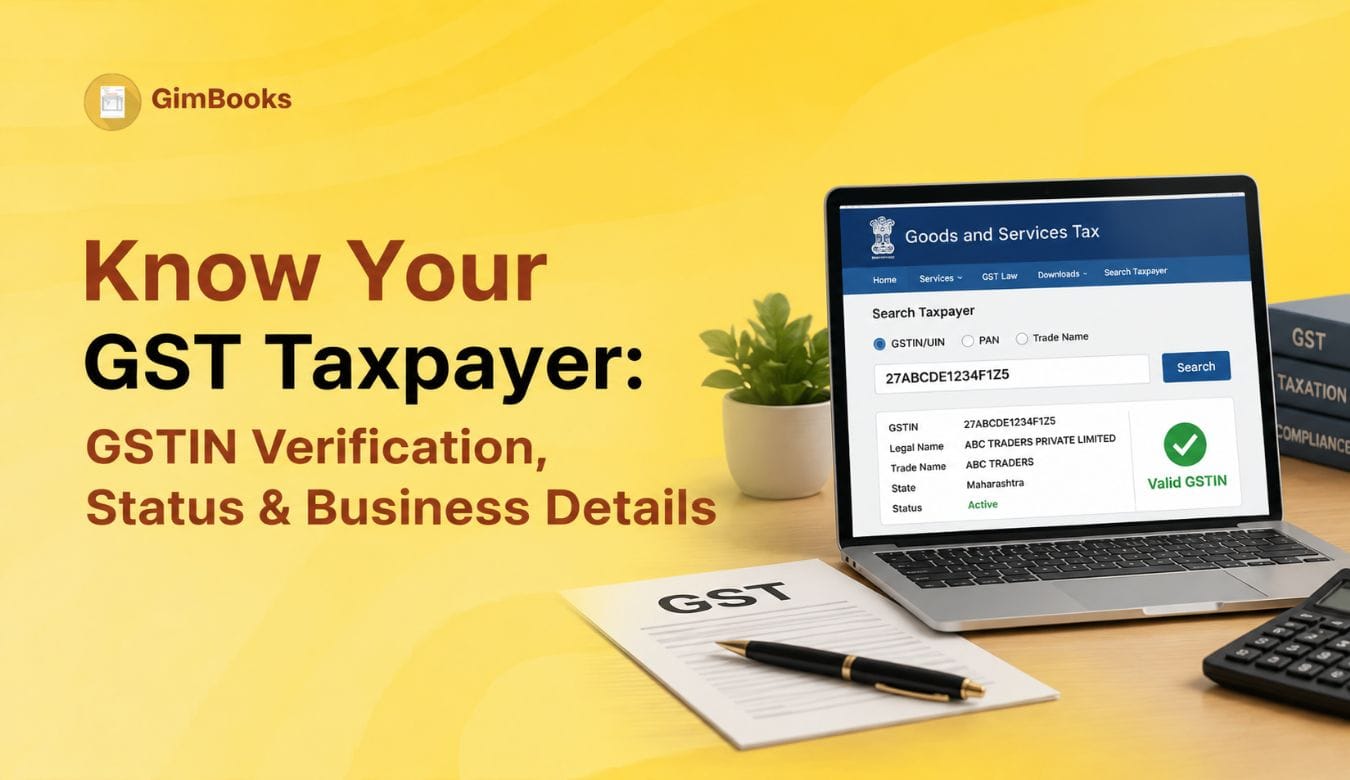
Before starting a business relationship with a supplier, customer or vendor, verifying GST registration details is an important compliance step.
A wrong or inactive GST number can create problems such as:
- Input Tax Credit (ITC) rejection
- Invoice mismatch
- Incorrect GST reporting
- Payment risks
- Vendor compliance issues
- Fake GST registration fraud
The Know Your GSTIN process helps businesses verify whether a GST number is valid, check taxpayer details, confirm registration status and ensure that invoices contain accurate GST information.
This guide explains how to perform GSTIN verification, what details are available after checking a GST number, why businesses should verify GST taxpayers and how GST verification supports smoother billing and accounting workflows.
The GST portal provides a taxpayer search facility where users can search registered taxpayers using GSTIN/UIN and view registration-related information.
What Is GSTIN?
GSTIN stands for Goods and Services Tax Identification Number.
It is a unique 15-digit identification number assigned to businesses registered under GST.
Every GSTIN contains information related to:
Example GSTIN structure:
27ABCDE1234F1Z5
Where:
- 27 = Maharashtra state code
- ABCDE1234F = PAN reference
- 1 = Entity number
- Z = Default character
- 5 = Check code
A GSTIN helps identify the registered taxpayer responsible for GST compliance.
Understanding the structure of GSTIN is also useful when checking customer and supplier details. Businesses can learn how the GST number is structured through this guide on finding PAN from GSTIN and identifying different GSTIN components.
Why Should Businesses Verify GSTIN Before Transactions?
GSTIN verification is not only a compliance activity. It helps businesses make safer financial decisions.
Incorrect GST details can create invoice mismatches and tax reporting issues. Businesses should also review common GST invoice errors to identify mistakes related to GSTIN, tax details and invoice information.
Before purchasing goods or services from a supplier, businesses should verify GST details to confirm:
- The supplier is genuinely GST registered.
- The GSTIN belongs to the correct business.
- The registration status is active.
- Invoice GST details are accurate.
- ITC eligibility is protected.
- Vendor records are updated.
For example:
A manufacturer purchases raw materials from a supplier and claims Input Tax Credit based on the supplier's GST invoice.
If the supplier's GSTIN is cancelled or incorrect, the buyer may face reconciliation issues during GST compliance.
What Details Can You Check Using GSTIN Verification?
When a GST number is verified, businesses can check important taxpayer information.
These details help businesses validate suppliers, customers and partners before transactions.
Businesses verifying taxpayer details should also maintain correct invoice records after validation. Following a GST invoice mandatory fields checklist helps ensure GSTIN, HSN/SAC, tax values and invoice details are correctly captured.
How to Verify GSTIN Online?
Businesses can verify GSTIN through the GST portal.
Step 1: Open GST Taxpayer Search
Go to the GST portal and select:
Search Taxpayer → Search by GSTIN/UIN
Step 2: Enter GSTIN
Enter the 15-digit GST identification number.
Example:
27ABCDE1234F1Z5
Step 3: Complete Verification
Enter the captcha and submit the request.
Step 4: Review GST Details
The portal displays available taxpayer information including registration status and business details.
GST verification tools available online generally follow this GSTIN search workflow using GSTIN/UIN or PAN-based search options.
How to Check GST Registration Status?
Checking GST registration status helps determine whether a taxpayer is currently valid.
Possible GST statuses include:
Businesses should verify supplier status before accepting GST invoices.
GSTIN Verification vs GST Number Search
Many users search for GST number verification and GST number search interchangeably, but they have slightly different purposes.
Both processes are important for businesses managing GST transactions.
Businesses can also perform additional checks by understanding GST state code details because the first two digits of GSTIN identify the registered state.
How to Verify a Supplier GSTIN Before Claiming ITC?
Input Tax Credit depends on accurate GST compliance.
Before accepting supplier invoices, check:
Supplier Verification Checklist
Regular GSTIN verification helps finance teams maintain cleaner purchase records.
How Businesses Can Use GSTIN Verification in Daily Operations
GST verification is useful across multiple business processes.
1. Vendor Onboarding
Before adding a supplier:
- Verify GSTIN
- Check legal name
- Confirm address
- Save GST details in vendor master
2. Purchase Invoice Verification
Before recording purchase:
- Match supplier GSTIN
- Verify invoice details
- Confirm tax information
3. Customer Verification
Businesses can verify customer GST details before:
- Extending credit
- Creating B2B invoices
- Processing large orders
4. Accounting Reconciliation
GSTIN verification helps maintain accurate:
- Purchase records
- Sales records
- Tax reports
- Vendor databases
Common GSTIN Verification Errors and Fixes
For businesses using e invoicing, understanding common e invoice error codes and fixes can also help resolve invoice submission and validation issues quickly.
Maintaining accurate GST master data reduces invoice errors.
GSTIN State Code Verification
The first two digits of GSTIN represent the state code.
Examples:
Businesses should verify that GSTIN state codes match:
- Supplier location
- Invoice address
- Place of supply
- Tax treatment
Wrong state mapping can result in incorrect CGST, SGST or IGST application.
Businesses should verify place of supply details along with GSTIN state information before deciding the applicable tax type. Refer to this place of supply audit checklist for GST invoices for additional verification steps.
GSTIN Verification Before Creating GST Invoice
Before issuing a GST invoice, businesses should confirm:
Businesses can also use a GST invoice mandatory fields checklist to ensure all required details are included before issuing an invoice.
- Customer GSTIN is correct.
- GSTIN belongs to the intended customer.
- State code matches customer location.
- Invoice type is correct.
- Tax treatment is accurate.
For businesses creating invoices regularly, maintaining updated customer records reduces manual errors.
Businesses can also follow a structured GST billing and invoicing process to manage customer details, invoice records and GST information more efficiently.
You can also refer to:
How Billing Software Helps Manage GSTIN Details
Manually checking GSTIN details for every customer and supplier can become difficult for businesses managing hundreds of transactions.
A billing system can help maintain:
- Customer GSTIN records
- Supplier GST details
- Address information
- Invoice history
- Tax reports
- Purchase records
With GimBooks GST Billing Software, businesses can manage GST invoices, customer records, inventory and accounting workflows from one platform.
Businesses can use structured GST records to reduce:
- Incorrect GSTIN entry
- Invoice mismatch
- Duplicate customer records
- Tax calculation errors
GSTIN Verification Checklist for Businesses
Before accepting or issuing GST invoices:
Supplier GST Verification
✓ Check GSTIN validity ✓ Confirm legal name ✓ Verify registration status ✓ Match invoice details ✓ Save updated vendor information
Customer GST Verification
✓ Confirm customer GSTIN ✓ Verify state code ✓ Check billing address ✓ Confirm GST registration type ✓ Maintain updated customer records
Internal Accounting Check
✓ Remove duplicate GST records ✓ Update inactive vendors ✓ Maintain GST master data ✓ Review GST details periodically
GSTIN Verification for Different Business Types
Frequently Asked Questions
What is Know Your GSTIN?
Know Your GSTIN refers to checking and verifying GST registration details of a taxpayer using their GST identification number. It helps businesses confirm taxpayer identity, status and registration information.
How can I verify a GSTIN online?
You can verify GSTIN online by using the GST portal taxpayer search option, entering the GSTIN/UIN and viewing available taxpayer details.
How do I check if a GST number is active?
Search the GSTIN on the GST portal and check the registration status displayed for that taxpayer.
What details can be checked using GSTIN?
GSTIN verification can provide details such as business name, registration status, address, taxpayer type and other registration information.
Why should businesses verify supplier GSTIN?
Supplier GSTIN verification helps businesses avoid incorrect invoices, reduce ITC risks and maintain accurate GST records.
Can GSTIN be verified using PAN?
Yes. GST search facilities may allow businesses to find GST registrations associated with a PAN and view registration details.
What happens if a supplier GSTIN is cancelled?
Businesses should review pending transactions, invoices and ITC implications before continuing purchases from that supplier.
How does billing software help with GSTIN management?
Billing software helps businesses store customer and supplier GST details, create compliant invoices and maintain organised GST records.
Conclusion
GSTIN verification is an essential compliance step for businesses dealing with suppliers, customers and B2B transactions.
The Know Your GSTIN process helps businesses verify whether a GST number is valid, check taxpayer status, confirm business details and reduce risks related to incorrect invoices and GST compliance issues.
Instead of checking GST details only when problems occur, businesses should make GSTIN verification part of their regular vendor onboarding, invoice checking and accounting workflow.
With accurate GST master data and organised billing processes, businesses can reduce errors, improve reconciliation and maintain smoother GST compliance.