
GST on Event Management Services in India: Rate, SAC Code & ITC Rules (2026 Guide)
Key Takeaways
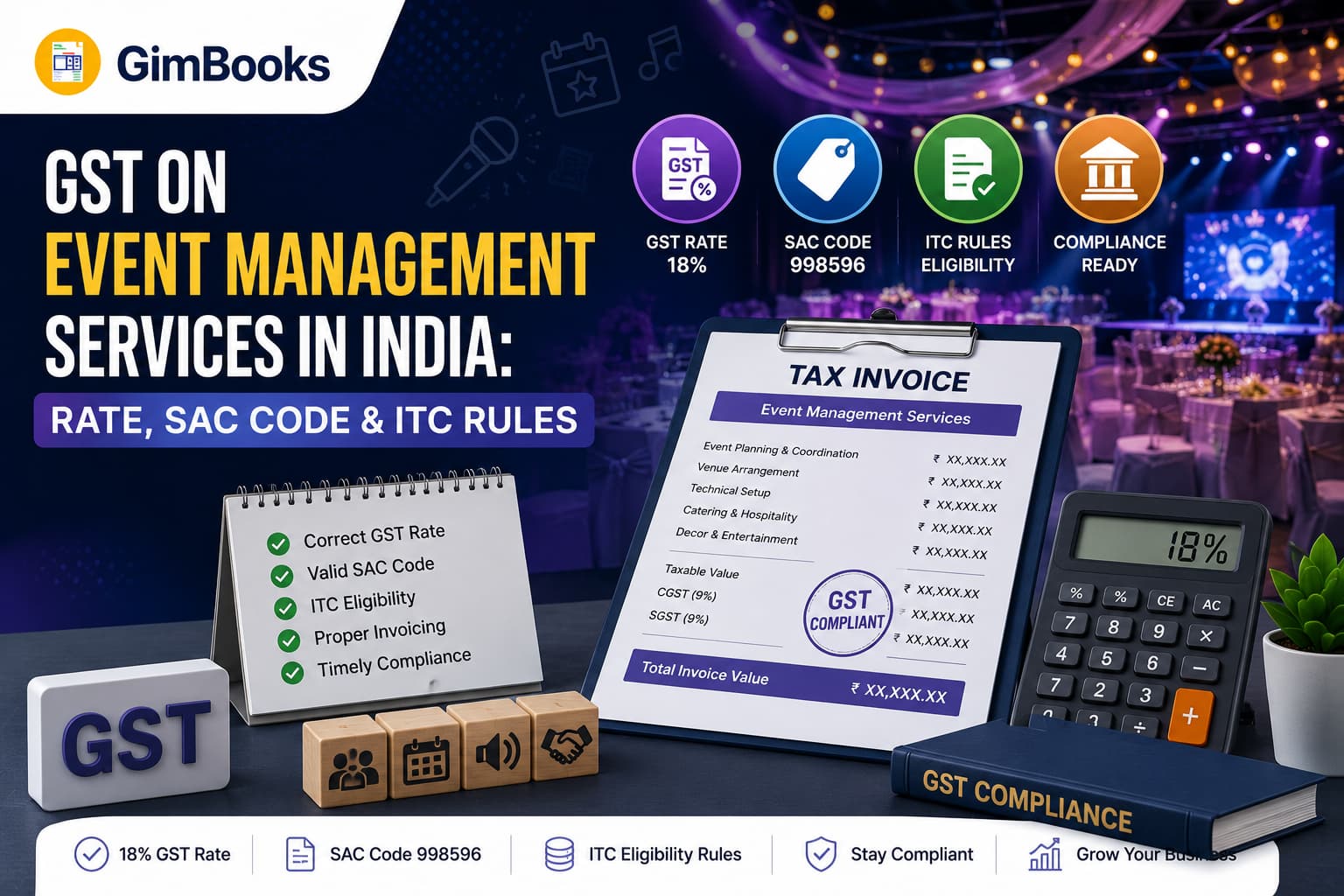
- Event management services generally attract 18% GST in India.
- SAC Code 998596 is commonly used for event management services.
- Input Tax Credit (ITC) is available on many business-related expenses used for providing event services.
- Composite supplies involving multiple event-related services are generally taxed at the principal service rate.
- Proper invoicing, documentation, and GST return filing are essential for compliance.
- Event management companies should carefully evaluate blocked credit provisions before claiming ITC.
Introduction
The event management industry in India has evolved significantly, serving corporate conferences, exhibitions, trade fairs, weddings, product launches, entertainment shows, and social events. As the sector grows, GST compliance has become a critical aspect of business operations for event planners and management companies.
Understanding GST on event management services is important not only for compliance but also for pricing services correctly, managing tax liabilities, and maximizing Input Tax Credit (ITC) benefits. Whether you operate a small event planning agency or a large event management company, knowing the applicable GST rate, SAC code, invoicing requirements, and ITC rules can help avoid costly mistakes.
This guide explains everything businesses need to know about GST on event management services in India in 2026.
What Are Event Management Services Under GST?
Before understanding GST implications, it's important to know what qualifies as event management services.
Event management involves planning, organizing, coordinating, and executing events on behalf of clients. These services may include venue selection, decoration, logistics management, entertainment arrangements, catering coordination, audiovisual setup, guest management, and post-event reporting.
Common examples include:
- Corporate conferences
- Business seminars
- Product launches
- Trade exhibitions
- Wedding planning
- Cultural events
- Award ceremonies
- Concerts and entertainment shows
Under GST, these services are generally treated as taxable services.
GST Rate on Event Management Services in India
The applicable GST rate for event management services is generally 18%.
This rate applies to most event planning, organizing, and coordination services provided to businesses, organizations, or individuals.
GST Rate Table for Event Management Services
Important Note
When multiple services are bundled together as part of a single event package, GST treatment may depend on whether the supply qualifies as a composite supply or mixed supply under GST provisions.
In most event management contracts, the principal supply is event management service, making the overall GST rate 18%.
SAC Code for Event Management Services
GST classifies services using Service Accounting Codes (SAC).
For event management services, the commonly applicable SAC code is:
This SAC generally covers services related to planning, organizing, promoting, and managing events, exhibitions, conventions, conferences, and similar activities.
Businesses should verify the exact SAC code applicable to their services based on the nature of operations and contractual arrangements.
What Services Are Covered Under Event Management?
Many event management companies provide end-to-end solutions rather than a single service.
These may include:
Pre-Event Services
- Event planning
- Budgeting
- Vendor coordination
- Venue booking
- Marketing and promotion
Event Execution Services
- Stage setup
- Audio and visual arrangements
- Lighting
- Decoration
- Registration management
- Security coordination
Post-Event Services
- Reporting
- Feedback collection
- Media management
- Event analytics
Since these services are often provided together, GST treatment typically follows the principal supply concept.
Input Tax Credit (ITC) Rules for Event Management Companies
Input Tax Credit is one of the most important GST benefits available to event management businesses.
ITC allows businesses to claim credit for GST paid on purchases and expenses used for providing taxable services.
Understanding eligible and ineligible credits can significantly impact profitability.
ITC Eligible Expenses
Event management companies can generally claim ITC on:
These expenses should be directly related to business operations and supported by valid tax invoices.
ITC Blocked Credits
Certain expenses may not qualify for ITC under Section 17(5) of the CGST Act.
Examples include:
Businesses should review GST provisions carefully before claiming credits.
GST on Catering and Food Services During Events
A common area of confusion involves food and catering services.
If catering is arranged through a third-party restaurant or caterer, GST treatment may vary based on the service provider's tax structure and applicable GST rates.
Event management companies should separately evaluate:
- Catering invoices
- Vendor GST registrations
- Eligibility of ITC
- Composite supply implications
Proper documentation is essential to support GST claims.
GST Registration Requirements for Event Management Businesses
Event management companies must obtain GST registration if their aggregate turnover exceeds the prescribed threshold limits.
However, businesses may voluntarily register even before crossing the threshold to:
- Claim ITC
- Work with corporate clients
- Participate in government tenders
- Improve business credibility
GST registration also helps streamline invoicing and tax reporting processes.
Invoicing Requirements for Event Management Services
Accurate invoicing plays a crucial role in GST compliance.
Every GST invoice should include:
- Supplier name and GSTIN
- Invoice number
- Invoice date
- Customer details
- SAC code
- Taxable value
- GST rate
- GST amount
- Place of supply
- Total invoice value
Errors in invoices can result in compliance issues and ITC disputes.
Place of Supply Rules for Event Management Services
The place of supply determines whether CGST + SGST or IGST applies.
For event-related services, GST treatment may depend on:
- Event location
- Customer location
- Type of recipient
- Nature of service
This becomes especially important when services are provided across multiple states.
Businesses handling large corporate events should pay special attention to place of supply provisions.
Common GST Mistakes Event Management Businesses Should Avoid
Many event management companies face GST notices due to avoidable errors.
Common Mistakes
- Using incorrect SAC codes
- Charging wrong GST rates
- Claiming ineligible ITC
- Poor invoice documentation
- Incorrect place of supply determination
- Missing GST return deadlines
- Vendor reconciliation issues
Regular compliance reviews can help minimize risks.
How Billing Software Helps Event Management Companies Stay GST Compliant
Managing multiple clients, vendors, invoices, and expenses manually can be challenging.
Modern GST billing software can simplify:
- GST-compliant invoicing
- Expense tracking
- ITC management
- Client billing
- Payment tracking
- Financial reporting
Automation reduces errors and improves compliance efficiency.
Why GimBooks Can Help Event Management Businesses
Event management companies often handle multiple vendors, customer payments, project expenses, and GST obligations simultaneously.
GimBooks helps businesses streamline operations through:
- GST-compliant invoicing
- Expense management
- Inventory tracking
- Business reporting
- Payment reminders
- Multi-device accessibility
- Cloud-based record management
Whether you're managing weddings, corporate conferences, exhibitions, or entertainment events, having a centralized billing and accounting platform can help improve financial control and compliance.
Conclusion
Event management services in India generally attract GST at 18%, making compliance an important consideration for businesses operating in this sector. Understanding the correct SAC code, GST treatment, invoicing requirements, and Input Tax Credit eligibility can help event management companies avoid compliance issues while improving profitability.
As businesses grow and handle larger events, maintaining accurate documentation, reconciling expenses, and managing GST filings become increasingly important. Using reliable billing and accounting systems can further simplify compliance and reduce administrative workload.
By staying informed about GST rules and following proper compliance practices, event management companies can focus more on delivering successful events and less on tax-related challenges.
Frequently Asked Questions (FAQs)
What is the GST rate on event management services in India?
The standard GST rate applicable to event management services in India is 18%. This generally covers planning, organizing, coordinating, and managing events.
What is the SAC code for event management services?
The commonly used SAC code for event management services is 998596. Businesses should verify applicability based on the exact nature of services offered.
Can event management companies claim Input Tax Credit?
Yes. Event management companies can generally claim ITC on business-related expenses such as venue rentals, equipment rentals, advertising, printing, and professional services, subject to GST provisions.
Is GST applicable on wedding planning services?
Yes. Wedding planning and management services generally attract GST at 18%.
Can ITC be claimed on catering expenses?
ITC eligibility depends on the nature of the catering service and applicable GST provisions. Businesses should review vendor invoices and Section 17(5) restrictions before claiming credit.
Is GST registration mandatory for event management businesses?
GST registration becomes mandatory when turnover exceeds the prescribed threshold limit. Businesses may also voluntarily register to claim ITC and work with larger clients.
What happens if the wrong GST rate is charged?
Charging an incorrect GST rate can result in tax liabilities, interest, penalties, and compliance notices from tax authorities.
How can event management companies improve GST compliance?
Businesses can improve GST compliance through accurate invoicing, proper documentation, timely return filing, regular reconciliation, and the use of GST billing software.