
GSTN Launches Standardized Annexure-B Utility: What It Means for GST Refund Claims in 2026
Learn how GimBooks helps you stay compliant with ewaybill, GSTN's new Annexure-B Offline Utility changes GST refund 2026, invoice verification, GSTR-2B matching, and ITC claims for exporters, SEZ suppliers, and businesses claiming accumulated ITC refund.

GSTN's New Annexure-B Utility: Complete Guide to Automated ITC Refund Verification and GST Refund Filing
The GSTN Update 2026, introducing the standardized GSTN Annexure B Utility, is one of the most important changes for businesses claiming GST refunds. The new utility aims to simplify the GST Refund Process in India by enabling automated invoice validation, structured reporting, and faster refund processing.
Businesses applying for an accumulated ITC refund through GST Refund Application RFD-01 will now need to submit Annexure-B using GSTN's prescribed utility. The system will perform GST invoice verification by validating purchase invoices against GST records, including GSTR 2B matching, before processing refund claims.
Whether you are an exporter, an SEZ supplier, or a business claiming an ITC refund for GST, understanding this update is crucial for successful refund filing.
What is Annexure B under GST?
Annexure-B is a statement containing details of inward supplies (purchases) on which Input Tax Credit has been claimed while applying for specific GST refunds involving accumulated ITC.
It serves as supporting documentation for refund applications filed through GST Form RFD-01 and helps GST authorities verify the ITC being claimed.
What Has Changed?
Earlier Process
Under the previous system:
Annexure-B was prepared manually.
- Businesses uploaded PDF or Excel files.
- GST officers verified invoices manually.
Refund processing depended heavily on departmental scrutiny.
New Process
Under the revised system:
Annexure-B must be prepared using GSTN's prescribed Excel-based utility.
Data is converted into a JSON file.
The JSON file is uploaded directly on the GST portal.
Invoice details are automatically validated against GST records, including GSTR-2B. The system flags mismatches before refund processing.
This transforms GST refund filing from a document-based process into a data-driven verification mechanism.
Why Has GSTN Introduced the New Utility?
The objective of new Annexure B Utility is to create a more accurate and transparent refund ecosystem.
Key goals include:
- Faster refund processing
- Automated invoice verification
- Reduction in fraudulent ITC claims
- Uniform reporting standards
- Reduced dependency on manual scrutiny
- Improved data accuracy across GST filings
According to GSTN, the utility enables system-based validation of invoices and refund-related documents, helping both taxpayers and tax authorities.
Which Refund Categories Are Covered?
The utility is mandatory for refund applications involving accumulated ITC under the following categories:
Refund Category Applicability
✅ Export of goods/services without payment of tax (LUT)
✅ Supplies made to SEZ units/developers without payment of tax
✅ Refund due to inverted duty structure
✅ Export of electricity without payment of tax
Key Features of the New Annexure-B Utility
1. Automated Invoice Verification
The biggest change is automated invoice matching. Invoices uploaded through Annexure-B will be validated against GSTR-2B records available on the GST portal.
This significantly reduces the chances of claiming refunds on unmatched or invalid invoices.
2. HSN/SAC-wise Reporting
Businesses must now report inward supply details HSN/SAC-wise.
This allows GSTN to perform deeper validation and improves the quality of refund data submitted.
3. Separate Classification of Purchases
Taxpayers must classify purchases separately as:
- Inputs
- Input Services
- Capital Goods
This improves the accuracy of refund calculations and ITC eligibility determination.
4. Disclosure of Blocked ITC
The utility requires separate disclosure of blocked ITC under Section 17(5) of the CGST Act.
This ensures ineligible credits are not accidentally included in refund claims.
5. Reporting of ITC Reversals
Separate tables have been introduced for reporting reversals under:
Rule 38
Rule 42
Rule 43
Section 17(5)
Other reversals
This gives GST authorities greater visibility into the taxpayer's ITC position.
What Is the Role of GSTR-2B in Refund Verification?
Under the new framework, GSTR-2B becomes even more critical.
- The system cross-checks invoice data reported in Annexure-B with invoices reflected in GSTR-2B.
- If discrepancies exist, they may be flagged in the validation process before the refund claim is processed.
- This means businesses can no longer rely solely on purchase records maintained internally.
- Vendor compliance now directly affects refund eligibility.
 Vikash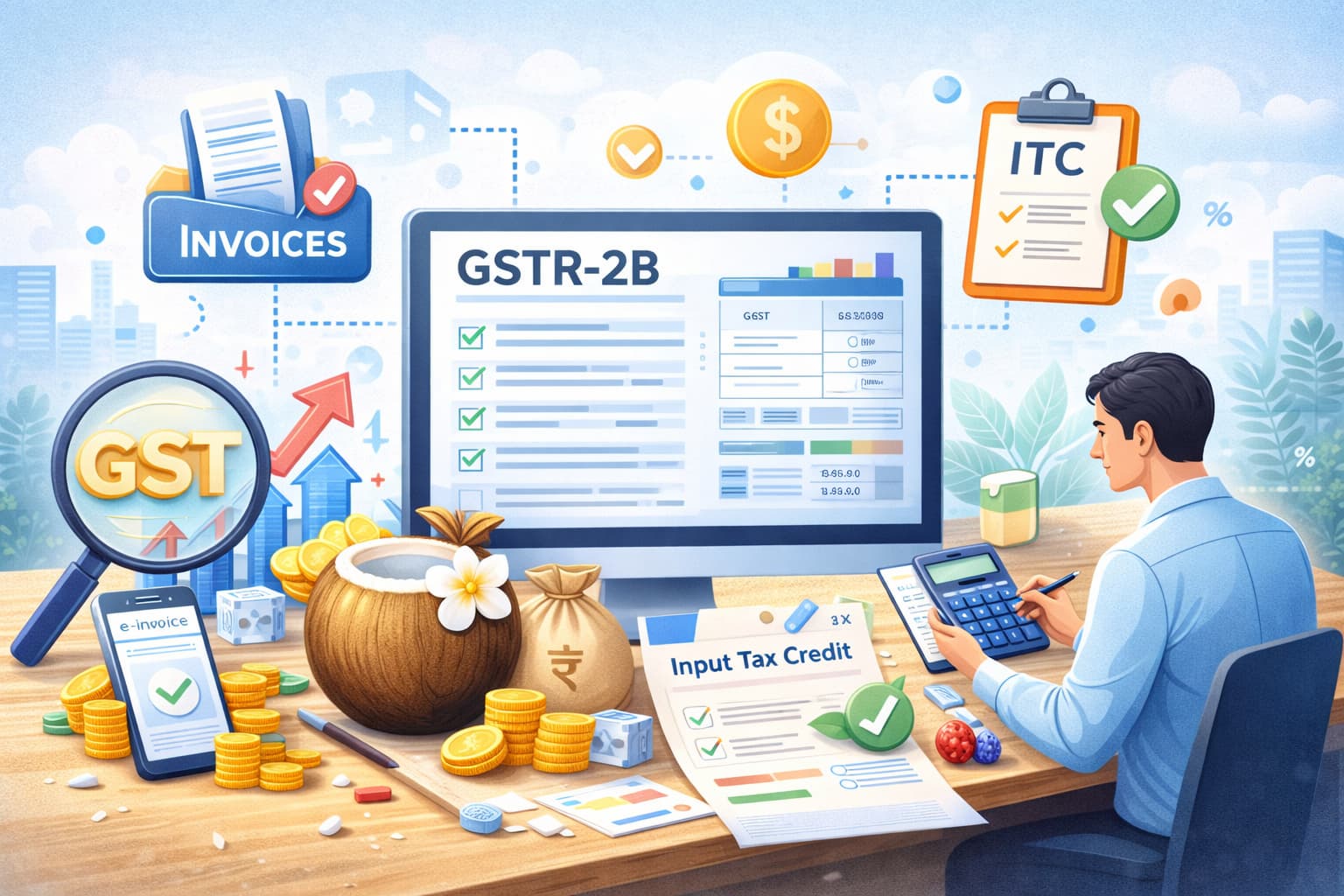
Invalid Documents Report: A GSTN Update Compliance Check
- GSTN has introduced an Invalid Documents Report.
- If the invoice data uploaded in Annexure B does not match GST records, the system generates validation errors due to GST Return mismatch.
- Businesses can review these errors and correct discrepancies before proceeding with their refund application.
Impact of Annexure B Utility on Businesses
| Business Type | Why This GSTN Update 2026 Matters |
|---|---|
| Exporters | Businesses exporting goods or services without payment of GST under LUT and claiming refunds of accumulated Input Tax Credit (ITC) will need accurate invoice reporting and GSTR-2B reconciliation for smoother refund processing. |
| SEZ Suppliers | Businesses supplying goods or services to Special Economic Zone (SEZ) units or developers and claiming refunds on unutilized ITC must ensure proper Annexure-B reporting and invoice validation. |
| Businesses Facing Inverted Duty Structure | Manufacturers and traders accumulating excess ITC due to higher GST rates on inputs than outputs will need to comply with the new automated verification process to claim eligible refunds. |
| MSMEs | Small and medium businesses that depend on timely GST refunds to maintain cash flow and working capital should focus on accurate record-keeping, supplier compliance, and regular GSTR-2B matching. |
Exporters are among the biggest stakeholders affected by this change.
Since export refund claims often involve large accumulated ITC balances, businesses will now need:
Better vendor compliance monitoring
Accurate invoice tracking
Regular GSTR-2B reconciliation
Proper ITC classification
Failure to reconcile invoices before filing may delay refunds or trigger validation errors.
Benefits of Annexure B Utility Update
Faster refund processing.
Fewer manual queries from officers.
Better transparency.
Reduced paperwork.
Challenges.
More detailed reporting requirements.
Need for regular reconciliations.
Increased dependence on supplier compliance.
Higher importance of GST software and accounting systems.
Businesses relying on manual bookkeeping may find the new requirements difficult to manage without digital tools.
Best Practices for Businesses
To ensure smooth ITC refund processing:
- Reconcile GSTR-2B every month.
- Don't wait until refund filing.
- Monthly reconciliation helps identify vendor-related issues early.
- Track Vendor Compliance
- Follow up with suppliers who delay GSTR-1 filing.
- Maintain Proper HSN/SAC Mapping
- Incorrect HSN/SAC reporting can lead to validation failures.
- Review ITC Reversals Carefully
- Ensure all reversals are reported correctly.
- Use GST-Compliant Accounting Software
- Automated reconciliation and invoice management can reduce refund filing errors.
Common Challenges Businesses May Face
Since the utility is new, some taxpayers have already reported issues such as:
Duplicate validation errors.
Upload failures.
JSON generation issues.
Invoice matching discrepancies.
GSTN is expected to continue refining the system as adoption increases.
Conclusion on Annexure B Utility Update
GSTN's standardized Annexure-B Utility marks a significant shift toward an automated GST refund process in India. By replacing manual PDF uploads with structured, system-validated data, GST Invoice Verification, improving GSTR 2B Matching, and standardizing GST Refund Application RFD-01 submissions, the government aims to improve transparency, reduce refund disputes, and accelerate processing times.
For businesses, especially exporters, SEZ suppliers, and MSMEs claiming accumulated ITC refunds, the message is clear: invoice reconciliation, vendor compliance, and accurate GST reporting are no longer optional. They are essential for faster and smoother refund approvals.
Frequently Asked Questions GSTN Update 2026 Annexure B Utility
Is Annexure-B Utility now mandatory?
Yes. For specified accumulated ITC refund categories, Annexure-B must be filed through the prescribed offline utility.
Can taxpayers still upload Annexure-B in PDF format?
No. The earlier PDF-based process has been replaced with the utility-based JSON upload mechanism.
Will invoices be verified automatically?
Yes. Uploaded GST invoices are validated against GST system records, including GSTR-2B.
Does this affect all GST refund applications?
No. The change primarily applies to refund categories involving accumulated ITC.
Why is GSTR-2B reconciliation now more important?
Because refund invoices are validated against GSTR-2B data, mismatches can impact refund processing.