
Key Difference Between TDS and TCS You Should Know
Key Takeaways
Before going into detailed explanations, here are the most important points every business owner or taxpayer should know about tds vs tcs:
- TDS is deducted by the payer before making payment
- TCS is collected by the seller during a sale
- TDS applies on income-related payments like salary, rent, fees
- TCS applies on sale of goods like cars, scrap, foreign remittance
- Both are governed under the Income Tax Act, India
- Incorrect usage can lead to penalties and notices
- Knowing applicability helps avoid compliance errors
The difference between TDS and TCS is something every small and micro-sized business in India should understand. These two terms are often mentioned in tax and accounting conversations, especially since the launch of GST.
However, many business owners are still confused about what they really mean, how they apply, and how to handle them correctly. This guide will explain everything in simple terms.
With the right knowledge, handling TDS and TCS becomes easier, and that’s where tools like GimBooks come in.
GimBooks is a cloud-based and mobile-first bookkeeping and business management platform designed especially for small and micro-sized businesses like yours.
What is TDS?
TDS full form: Tax Deducted at Source
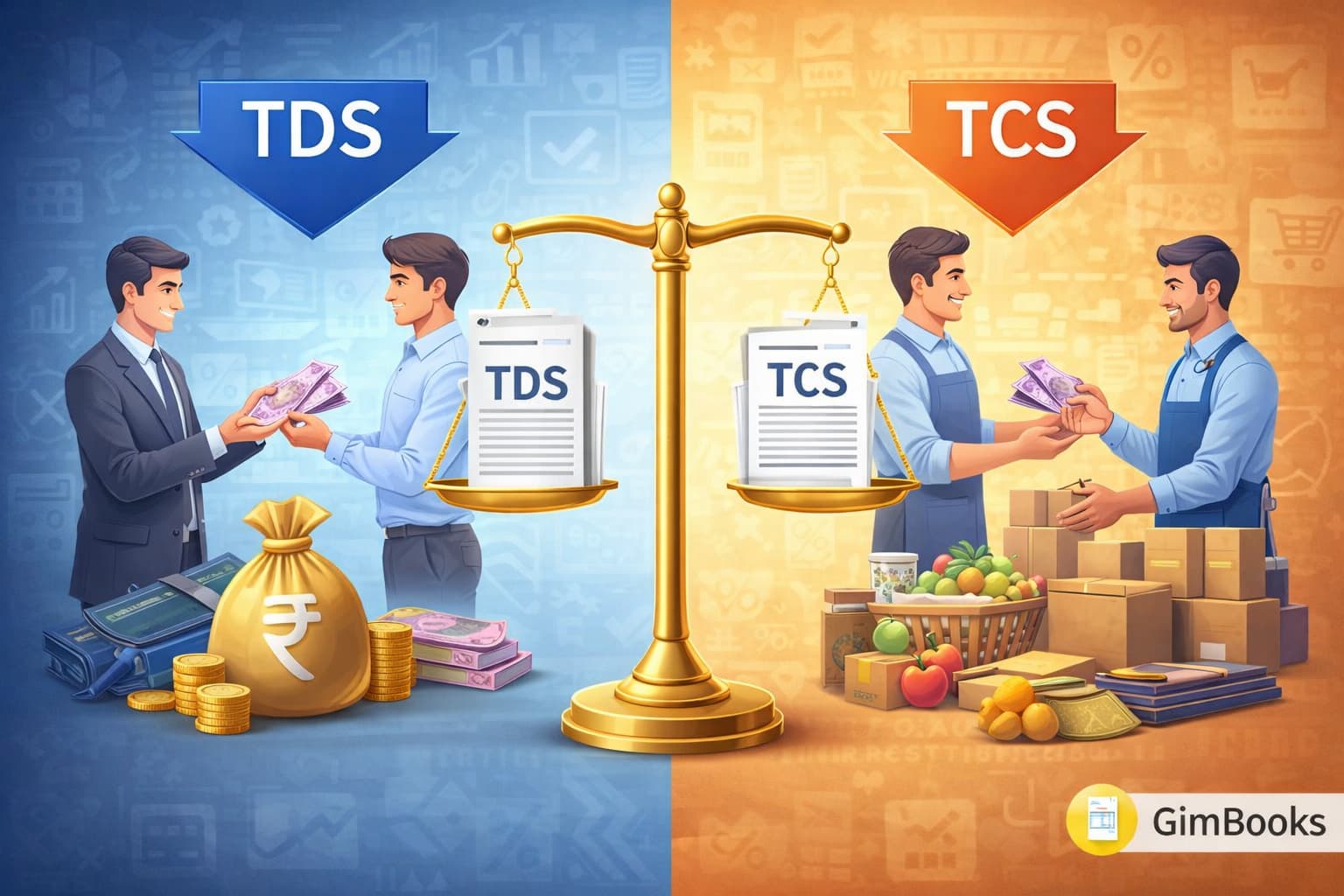
TDS means the payer deducts a certain percentage of tax before making a payment to the receiver. This tax is then deposited to the government on behalf of the receiver. It helps the government collect tax in advance.
Example:
A company pays ₹50,000 to a consultant → deducts ₹5,000 as TDS → pays ₹45,000 → deposits ₹5,000 to the government.
Why TDS is Important
- Ensures tax collection in advance
- Reduces tax burden at year-end
- Tracks income flow in the system
Common Payments That Attract TDS:
- Salaries
- Rent
- Contractor payments
- Professional fees
- Commission
TDS is governed by the Income Tax Act 1961, and different payments have different TDS rates.
What is TCS?
TCS full form in Tax : Tax Collected at Source
TCS means the seller collects tax from the buyer while selling certain goods or providing services. This tax is then paid to the government by the seller.
Example:
A car dealer sells a car worth ₹12 lakh → collects TCS → buyer pays additional amount → seller deposits tax.
Why TCS is Used
- Tracks high-value transactions
- Ensures tax compliance on sales
- Prevents tax evasion
Common Goods and Services That Attract TCS:
- Sale of scrap
- Sale of minerals
- Sale of timber
- Sale of alcohol
TCS is also regulated by the Income Tax Act 1961 and is mainly used for transactions involving specific goods or services.
TDS vs TCS: Major Differences Explained
Let’s look at the TDS and TCS differences in a simple table format:
TDS and TCS Under GST
What are TDS and TCS in GST? Let’s simplify that too.
TDS under GST
- TDS applies when a government department or notified company makes a payment to a supplier for taxable goods or services.
- The rate is 2% (1% CGST + 1% SGST or 2% IGST).
- This amount is deducted from the payment and deposited to the government.
TCS under GST
- TCS applies to e-commerce operators like Amazon, Flipkart, etc.
- They collect tax at 1% while making payments to sellers registered on their platforms.
- It is done to track online transactions and ensure GST compliance.
Applicability of TDS and TCS
One of the biggest challenges for businesses is understanding when TDS applies and when TCS applies. This depends on transaction type, turnover, and nature of activity.
When TDS Applies:
- Salary payments
- Contractor or freelancer payments
- Rent and professional fees
- Purchase of goods above threshold
When TCS Applies:
- Sale of goods under Section 206C
- Car sale above ₹10 lakh
- Foreign remittance
- Scrap and specific goods
Business Insight:
If your turnover crosses specified limits, you may need to comply with both TDS and TCS provisions.
Check latest complete TDS and TCS rate chart
Examples (Practical Scenarios)
Real-life examples help in clearly understanding how tds vs tcs works in business situations.
Scenario 1: Salary Payment
Employer deducts TDS before paying employee
Scenario 2: Car Sale
Dealer collects TCS from buyer
Scenario 3: Purchase of Goods
Buyer deducts TDS under Section 194Q
Scenario 4: Sale of Goods
Seller collects TCS under Section 206C
Due Dates for TDS & TCS
Knowing due dates is critical because delays directly result in penalties and interest. Both TDS and TCS follow a structured compliance timeline.
Payment Deadlines:
- Monthly: 7th of next month
- March: Extended deadline
Return Filing:
- Quarterly filing required
Practical Tip:
Maintain a simple compliance calendar to track all deadlines.
Penalty for Non-Compliance
Failing to follow TDS or TCS rules can result in financial penalties and compliance issues. Even small delays can increase costs.
Late Filing Fee (Section 234E)
- ₹200 per day until return is filed
Penalty (Section 271H)
- ₹10,000 to ₹1,00,000
Impact on Business:
- Increased compliance cost
- Risk of notices
- Cash flow pressure
Common Mistakes to Avoid
Many businesses face penalties due to avoidable mistakes. Being aware of these errors can help improve compliance.
Common Errors:
- Confusing TDS with TCS
- Applying wrong section
- Missing due dates
- Incorrect PAN details
- Ignoring thresholds
Tip: Always verify transaction type before applying tax.
Why Is It Important to Understand TDS and TCS?
For small and micro-sized businesses, understanding tds tcs is essential to:
- Stay compliant with Indian tax laws.
- Avoid penalties and late fees.
- Manage cash flow properly.
- File accurate tax returns.
- Build trust with clients and vendors.
Many businesses face trouble just because they don’t know when to deduct or collect tax or how to file it properly.
Trending - TDS compliance calendar
How to Handle TDS and TCS Easily with GimBooks
Tracking, collecting, deducting, and filing TDS and TCS can be hard. But with GimBooks, you get a user-friendly and mobile-first tool that makes the job easy.
Benefits of Using GimBooks
- GST-compliant invoicing: Automatically apply TDS and TCS on invoices.
- Smart reminders: Get alerts for due dates and filings.
- Easy reports: Generate reports like Form 26Q or 27EQ.
- Secure cloud access: Access your data anytime, anywhere.
- Designed for small businesses: No need to hire a full-time accountant!
Whether you sell goods online, run a store, or offer services, GimBooks helps you stay on top of your business finances.
Common Mistakes to Avoid When Handling TDS and TCS
- Not deducting or collecting when required: This can lead to penalties.
- Missing due dates: Late filing results in interest charges.
- Wrong PAN or GST details: These can lead to rejections and legal issues.
- Incorrect rates: Each section has its rate, so be careful.
- No proper records: Always keep receipts, payment slips, and challans.
Avoid these mistakes by using a reliable tool like GimBooks.
Also read - Difference Between Debit Note and Credit Note in GST
Summing Up
Understanding the difference between TDS and TCS is not just about tax compliance; it’s also about running a smooth and trustworthy business. Small and micro-sized business owners often get confused, but the rules are quite simple once you break them down.
And with a smart solution like GimBooks, managing TDS and TCS is easier than ever. Whether it's tracking tax, creating invoices, or filing returns, GimBooks gives you the tools to stay ahead.
Ready to simplify your tax tasks? Visit GimBooks today and take control of your business accounting!
To know more, explore GimBook's informative blogs!
Suggested read - Difference Between Cash Flow and Fund Flow
Frequently Asked Questions (FAQs)
Is TDS refundable?
Yes. If excess TDS is deducted, you can claim a refund while filing your income tax return.
Can a seller deduct TDS?
No. TDS is always deducted by the buyer/payer.
Who should collect TCS?
Only those who sell specific goods are listed under Section 206C.
Is TDS or TCS applicable to freelancers?
Yes. If a freelancer earns above a certain limit, the client must deduct TDS.
What is the TDS and TCS return filing date?
Generally, TDS/TCS must be deposited by the 7th of the next month, and quarterly returns must be filed.
What is 6CE in TDS?
6CE in TDS refers to Section 206CE of the Income Tax Act, which deals with penalties for failure to comply with TDS/TCS provisions. It may attract a fee or penalty if required tax statements are not filed correctly or on
What does micro mean in TDS?
In TDS, micro refers to micro enterprises as defined under the MSME classification. These businesses may be eligible for certain exemptions or different TDS applicability based on their turnover and compliance status.