
GST Rates in India 2026: Complete Guide to Tax Slabs, Item-Wise Rates & Latest Updates
Key Takeaways
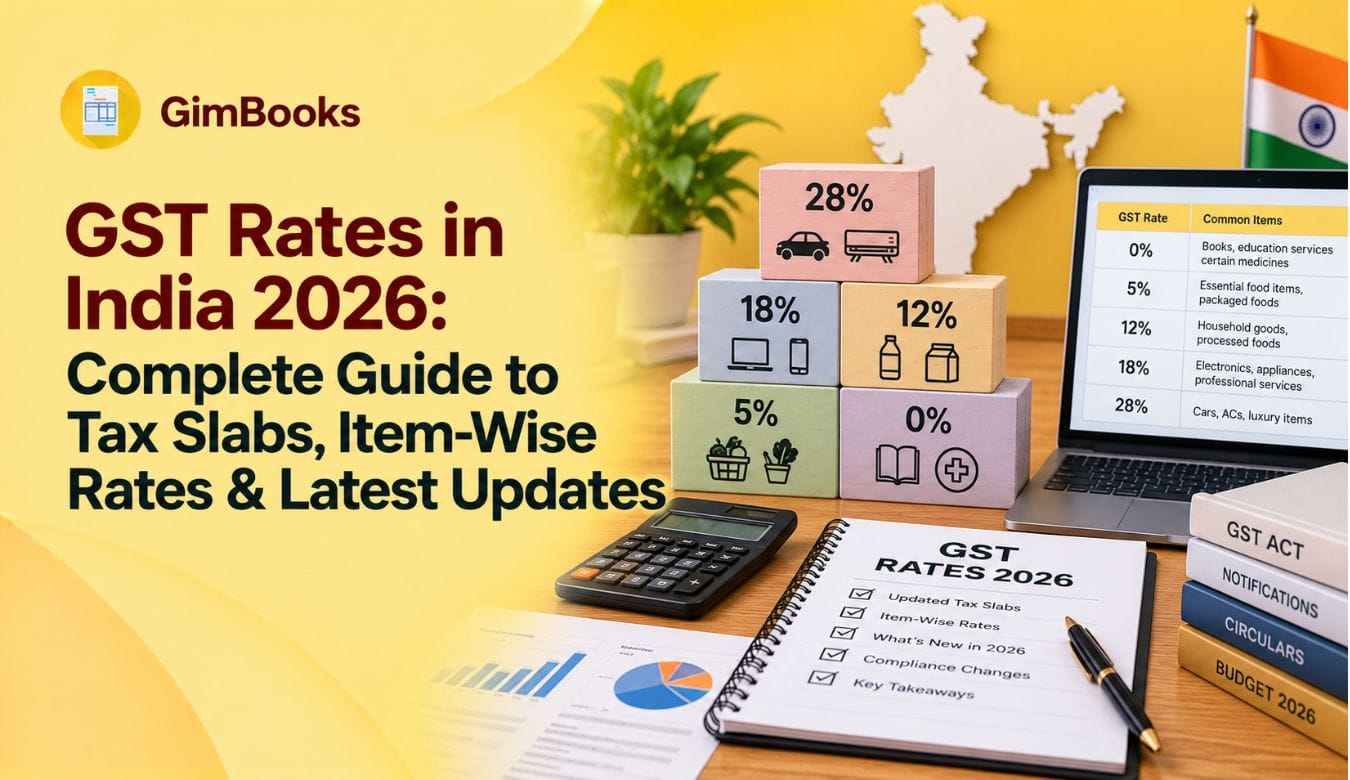
- GST in India is divided into 0%, 5%, 12%, 18%, and 28% slabs
- Most goods and services fall under the 18% tax slab
- Essential items are taxed at 0% or 5%
- Luxury and sin goods attract 28% + cess
- GST rates are updated through GST Council decisions
- Businesses must apply correct rates to avoid penalties
- Understanding GST slabs helps in better pricing and compliance
Introduction
GST rates directly affect pricing, profitability, and compliance for every business in India. Whether you are a small business owner, freelancer, or accountant, knowing the gst rates in india 2026 is essential to avoid errors in billing and tax filing.
The GST system uses multiple tax slabs based on the type of goods and services. However, confusion often arises when selecting the correct rate for a product or service. This guide explains GST slabs, item-wise rates, and latest updates in a simple and practical way so you can apply them correctly in your business.
What is the GST Rate?
Before looking at slabs, it’s important to understand what a GST rate actually means in practice.
A GST rate is the percentage of tax applied on the value of goods or services at the time of sale. It determines how much tax a business must collect from customers and pay to the government.
Example:
If a product costs ₹1,000 and GST rate is 18% → GST = ₹180 → Final price = ₹1,180
👉 Correct GST rate ensures accurate billing and compliance.
Latest GST Rate Updates (2026)
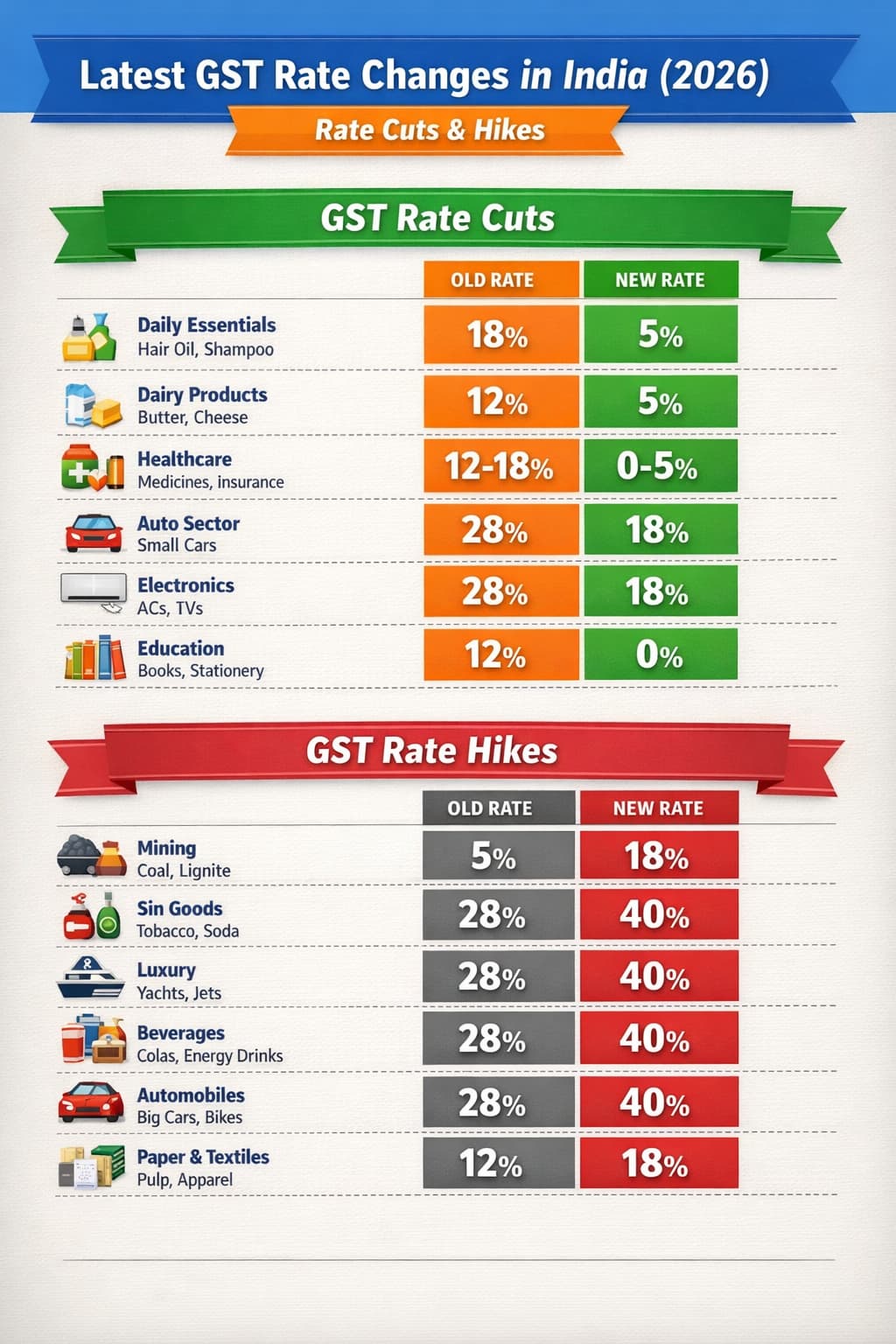
GST rates are not fixed permanently. They are revised periodically based on decisions by the GST Council to balance revenue and economic growth.
Key Highlights (Recent Updates):
- Rationalization of certain goods and services
- Adjustments in tax slabs for specific sectors
- Focus on simplifying compliance
Practical Insight:
Businesses should regularly check updates because applying outdated GST rates can lead to penalties and incorrect filings.
GST Rate Cuts (Recent Updates)
GST Rate Hikes (Recent Updates)
Get the new GST rates list PDF for a quick reference to selected GST rates in India, HSN/SAC classifications and effective dates. Verify the exact entry and conditions on CBIC before invoicing.
Types of GST Rates and Structure in India
The GST system in India follows a multi-rate structure to accommodate different categories of goods and services.
GST Tax Slabs Overview
Why Multiple Slabs?
- Keeps essential items affordable
- Applies higher tax on luxury goods
- Balances economic needs
List of Items with 0% GST Rate (Nil Rated)
This section includes essential goods that are either tax-free or exempt to keep them affordable for the general public.
Examples:
- Fresh fruits and vegetables
- Milk and dairy products
- Unbranded food items
- Books and newspapers
0% GST Items Table
👉 These items do not attract GST, reducing cost for consumers.
List of Items Taxed at 5% GST Rate
The 5% slab applies to essential goods and services that are slightly processed or packaged.
Examples:
- Packaged food items
- Footwear below threshold
- Transport services
5% GST Items Table
👉 This slab balances affordability and tax revenue.
List of Items Taxed at 12% GST Rate
The 12% slab applies to standard goods used in daily life but not classified as essential.
Examples:
- Processed food products
- Mobile phones (certain categories)
- Business services
12% GST Items Table
List of Items Taxed at 18% GST Rate
This is the most common GST slab and covers the majority of goods and services in India.
Examples:
- Software services
- Restaurant services (non-AC/AC specific cases)
- Financial services
18% GST Items Table
👉 Most businesses fall under this slab.
List of Items Taxed at 28% GST Rate
The highest GST slab applies to luxury items and products considered non-essential.
Examples:
- Cars and SUVs
- Air conditioners
- Tobacco products
28% GST Items Table
👉 Additional cess may apply on some items.
Other GST Rates (Special Cases)
Apart from standard slabs, some goods attract special GST rates or cess.
Examples:
- Gold → 3% GST
- Precious stones → 0.25% GST
Special GST Rates Table
GST Rates with HSN Code (Overview)
HSN codes are used to classify goods and determine the applicable GST rate.
Why HSN is Important:
- Ensures correct GST rate application
- Helps in GST return filing
- Avoids classification errors
HSN Code Example Table
Impact of GST Rates on Businesses
GST rates directly impact pricing, margins, and competitiveness.
Key Impacts:
- Pricing decisions
- Profit margins
- Customer demand
- Compliance requirements
Example:
Higher GST → Higher price → Reduced demand
Common Mistakes to Avoid
Many businesses face issues due to incorrect GST rate application.
Common Errors:
- Applying wrong GST slab
- Using outdated rates
- Incorrect HSN classification
- Ignoring exemptions
👉 Always verify GST rate before invoicing.
Simplify GST Billing with GimBooks
Managing GST rates manually can lead to errors, especially when dealing with multiple products and tax slabs.
GimBooks helps simplify GST billing and ensures correct tax application for every invoice.
How GimBooks Helps:
- GST-ready invoicing
- Auto-calculation of tax
- Easy expense tracking
- Organized financial records
- Reduces manual errors
For small businesses and freelancers, this saves time and improves compliance accuracy.
Start managing your GST billing and compliance effortlessly with GimBooks.
Conclusion
Understanding gst rates in india 2026 is essential for accurate billing, pricing, and compliance. With multiple slabs and frequent updates, businesses must stay informed and apply correct rates.
Key takeaway:
- Use correct GST slab
- Stay updated with changes
- Maintain proper records
Following these practices helps avoid penalties and ensures smooth business operations.
Disclaimer - This content is for informational purposes only and based on current GST provisions. GST rates may change as per government notifications. Consult a tax professional for accurate advice.
FAQs on GST Rates in India
1. What are GST rates in India in 2026?
GST rates are divided into 0%, 5%, 12%, 18%, and 28% slabs depending on the type of goods and services.
2. Which GST slab is most common?
The 18% slab is the most widely used for goods and services.
3. Are GST rates the same for all products?
No, GST rates vary based on classification and HSN code.
4. What is GST on essential items?
Most essential goods are taxed at 0% or 5%.
5. What is the GST on luxury items?
Luxury goods attract 28% GST along with possible cess.
6. How to check GST rate for a product?
Use HSN code classification or GST portal.
7. Why do GST rates change?
Rates are revised by GST Council based on economic needs.
8. Can wrong GST rate lead to penalty?
Yes, incorrect GST application can result in penalties and notices.