How to Start an Export Business in India - A Complete Startup Guide
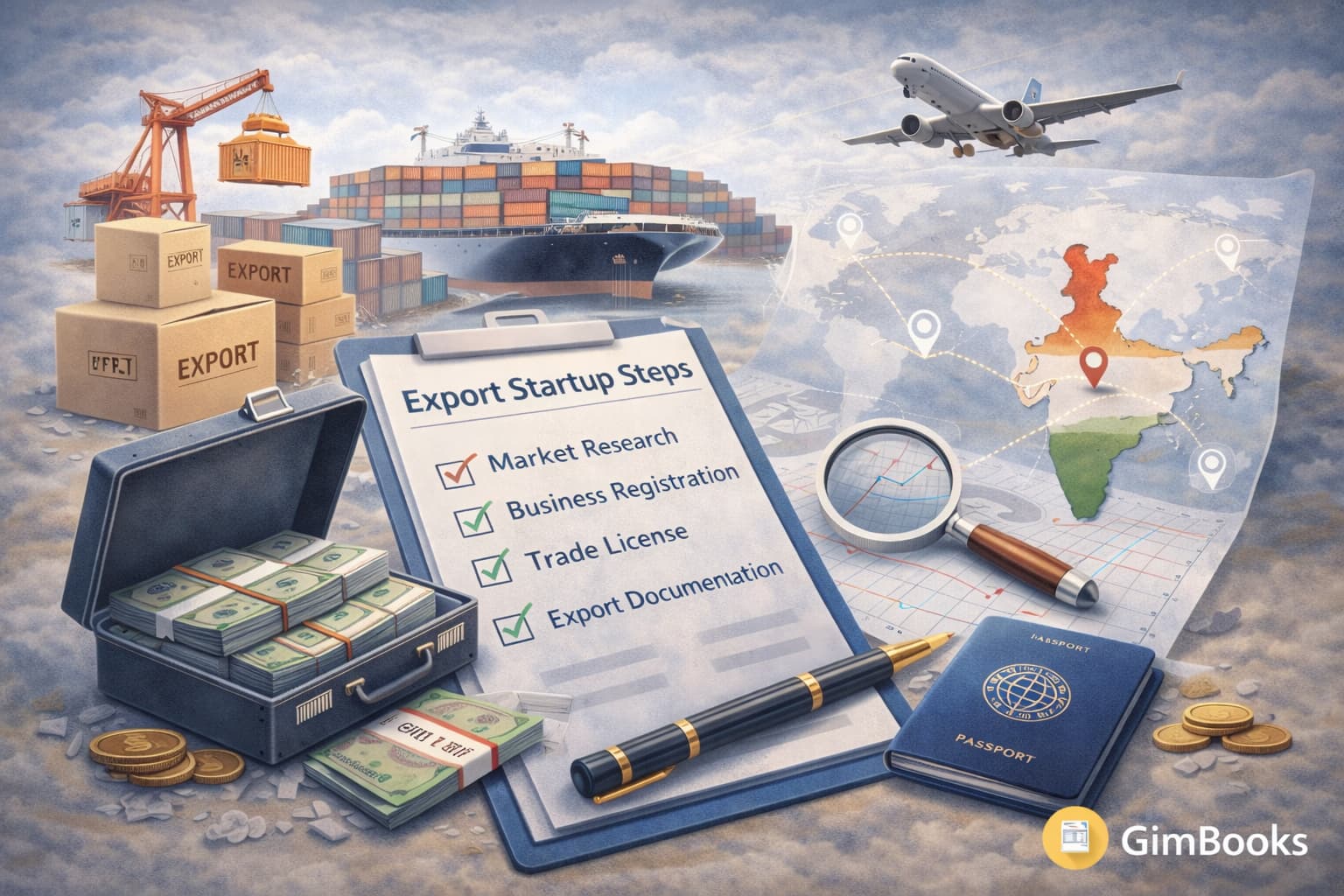
How to start an export business in India is a question many small business owners ask today. With global demand rising for Indian products, this is the right time to explore the export business in India. From handmade goods to food items and textiles, Indian products are in demand across the world.
The good news is that starting an export business is not as hard as it looks. With the right steps, basic documents, and clear planning, even a small or micro-sized business can go global.
This informative blog will help you understand how to start an export business in India, the documents you need, the costs involved, and how to grow step by step.
What is an export business in India?
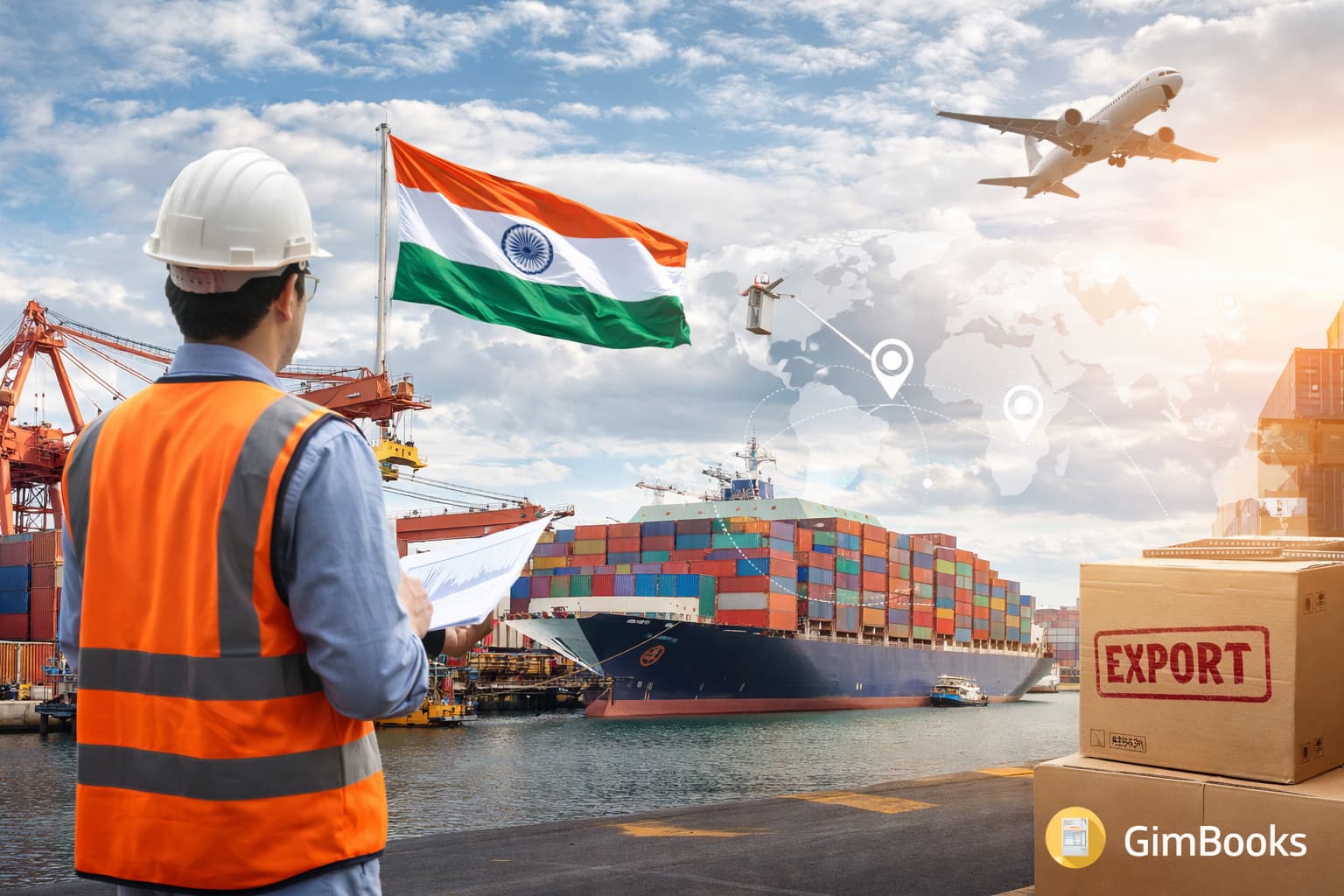
An export business in India is a process where goods or services produced in India are sold to buyers in other countries in exchange for foreign currency. It involves product selection, legal registration, international buyer discovery, shipping, and payment collection through banking channels.
India exports products such as spices, textiles, handicrafts, engineering goods, and food items to global markets including the US, UK, UAE, and Europe.
Why start an export business in India?
India is one of the fastest-growing global exporters, with total exports (goods + services) reaching approximately $825 billion in FY 2024–25.
Key reasons to start:
- High global demand for Indian products
- Strong government support via export schemes
- Lower startup cost compared to many businesses
- Access to global customers via digital platforms
- Strong MSME export ecosystem
Export businesses can generate higher margins because revenue is earned in foreign currency and premium pricing is often possible in global markets.
How does the export business work in India?
The export process follows a structured flow:
- Select a product with international demand
- Register your business and obtain licenses
- Find an international buyer
- Finalize pricing, contracts, and payment terms
- Ship goods through logistics partners
- Receive foreign currency payment in your bank account
- Convert earnings into INR via authorized banks
This process is regulated by the Directorate General of Foreign Trade (DGFT) and customs authorities.
Step-by-step guide to start an export business in India
1. Choose a product for export
Selecting the right product is the foundation of your export business.
High-demand export products:
- Spices and agricultural products
- Textiles and garments
- Handicrafts
- Leather goods
- Organic and eco-friendly products
- Engineering goods
Focus on products with:
- Global demand
- Stable supply capability
- Quality consistency
2. Register your business legally
You must register your business before exporting.
Business structures:
- Sole Proprietorship
- Partnership
- LLP
- Private Limited Company
Required basics:
- PAN Card
- GST Registration (if applicable)
- Current Bank Account
3. Get Import Export Code (IEC)
The Import Export Code (IEC) is mandatory for all exporters in India.
It is issued by the Directorate General of Foreign Trade (DGFT) and is required to legally export goods.
Without IEC, international trade transactions cannot be processed.
4. Open a business current account
A current account is required for international transactions.
Choose a bank that offers:
- Foreign currency support
- Low conversion fees
- Export documentation assistance
5. Identify target export markets
Selecting the right country is critical for success.
Key factors:
- Import demand
- Competition level
- Pricing potential
- Regulatory requirements
- Shipping costs
Popular export destinations include:
- United States
- United Arab Emirates
- United Kingdom
- European Union countries
6. Find international buyers
Buyers can be found through:
- B2B platforms (e.g., IndiaMART, Alibaba)
- Trade fairs and expos
- Export promotion councils
- Direct outreach and email marketing
- Government trade portals
Building trust and consistent quality delivery is essential for repeat orders.
7. Understand export pricing
Export pricing must include all costs:
- Production cost
- Packaging
- Shipping and freight
- Customs duties
- Banking charges
- Profit margin
Incorrect pricing can either reduce competitiveness or eliminate profit.
8. Manage logistics and shipping
Logistics is a key part of export operations.
Required partners:
- Freight forwarder
- Customs clearance agent
- Shipping company
Shipping modes:
- Air freight (fast, expensive)
- Sea freight (cost-efficient)
- Road transport (regional trade)
Documents required for export business in India
Key export documents include:
- Import Export Code (IEC)
- GST Registration
- PAN Card
- Current Bank Account
- Commercial Invoice
- Packing List
- Shipping Bill
- Bill of Lading / Airway Bill
Accurate documentation is critical for customs clearance and payment processing.
Is export business profitable in India?
Yes, export business in India can be highly profitable.
Reasons:
- Foreign currency earnings
- Larger global market size
- Premium pricing opportunities
- Government incentives and schemes
Profit depends on:
- Product demand
- Cost efficiency
- Quality control
- Buyer relationships
Best export business ideas for small businesses in India
Small exporters often succeed with low-investment products such as:
- Organic spices
- Handmade jewelry
- Cotton garments
- Eco-friendly products
- Ayurvedic products
- Jute-based goods
These products have strong international demand and manageable production requirements.
Challenges in export business
Common challenges include:
- Payment delays
- Currency fluctuations
- Quality disputes
- Customs clearance delays
- Regulatory changes
These risks can be reduced through contracts, insurance, and proper documentation.
Tips for success in export business
- Start with one product category
- Focus on one target country initially
- Maintain strict quality control
- Build long-term buyer relationships
- Track all financial transactions properly
- Stay updated with DGFT export policies
Managing finances in an export business
Export businesses require structured bookkeeping for invoices, GST, payments, and foreign transactions.
Tools like GimBooks help small businesses manage:
- Invoicing
- Expense tracking
- GST compliance
- Payment tracking
- Financial reporting
Proper financial management is essential for scaling an export business sustainably.
Conclusion
Starting an export business in India involves structured steps: selecting the right product, completing legal registration, obtaining IEC, finding buyers, managing logistics, and maintaining financial discipline.
With strong global demand and government support, export business remains one of the most scalable opportunities for Indian entrepreneurs in 2026.
Also check
How to Start a Pharmaceutical Company in India [2026]
FAQs
What is the first step in starting an export business in India?
The first step in starting an export business in India is selecting a product with consistent global demand. After that, the business must be legally registered and an Import Export Code (IEC) must be obtained from the Directorate General of Foreign Trade (DGFT). The IEC is mandatory for exporting goods from India.
How much money is required to start an export business in India?
The investment required to start an export business in India depends on the product type, scale, and target market. A small export business can begin with a relatively low budget, especially in categories like handicrafts, spices, or handmade goods. Main costs typically include business registration, packaging, shipping, marketing, and compliance expenses.
Is export business profitable for small businesses in India?
Yes, export business can be profitable for small businesses in India when managed properly. Exporters earn in foreign currency, and global markets offer larger demand compared to domestic markets. Profitability depends on product selection, pricing strategy, quality control, and the ability to build long-term international buyer relationships.
What documents are required to start an export business in India?
To start an export business in India, key documents include:
- Import Export Code (IEC) issued by DGFT
- PAN card
- GST registration (if applicable)
- Current business bank account
- Commercial invoice
- Packing list
- Shipping bill
- Bill of lading or airway bill
Accurate documentation is essential for customs clearance and smooth international transactions.
What are the best export business opportunities in India today?
Some of the best export business opportunities in India include:
- Organic spices and agricultural products
- Textiles and garments
- Leather goods
- Handicrafts and handmade products
- Processed food items
- Eco-friendly and sustainable products
These categories have strong global demand and are suitable for small and micro exporters entering international markets.