
E-Way Bill Software for Transporters, Traders and Manufacturers (2026 Guide)
Key Takeaways
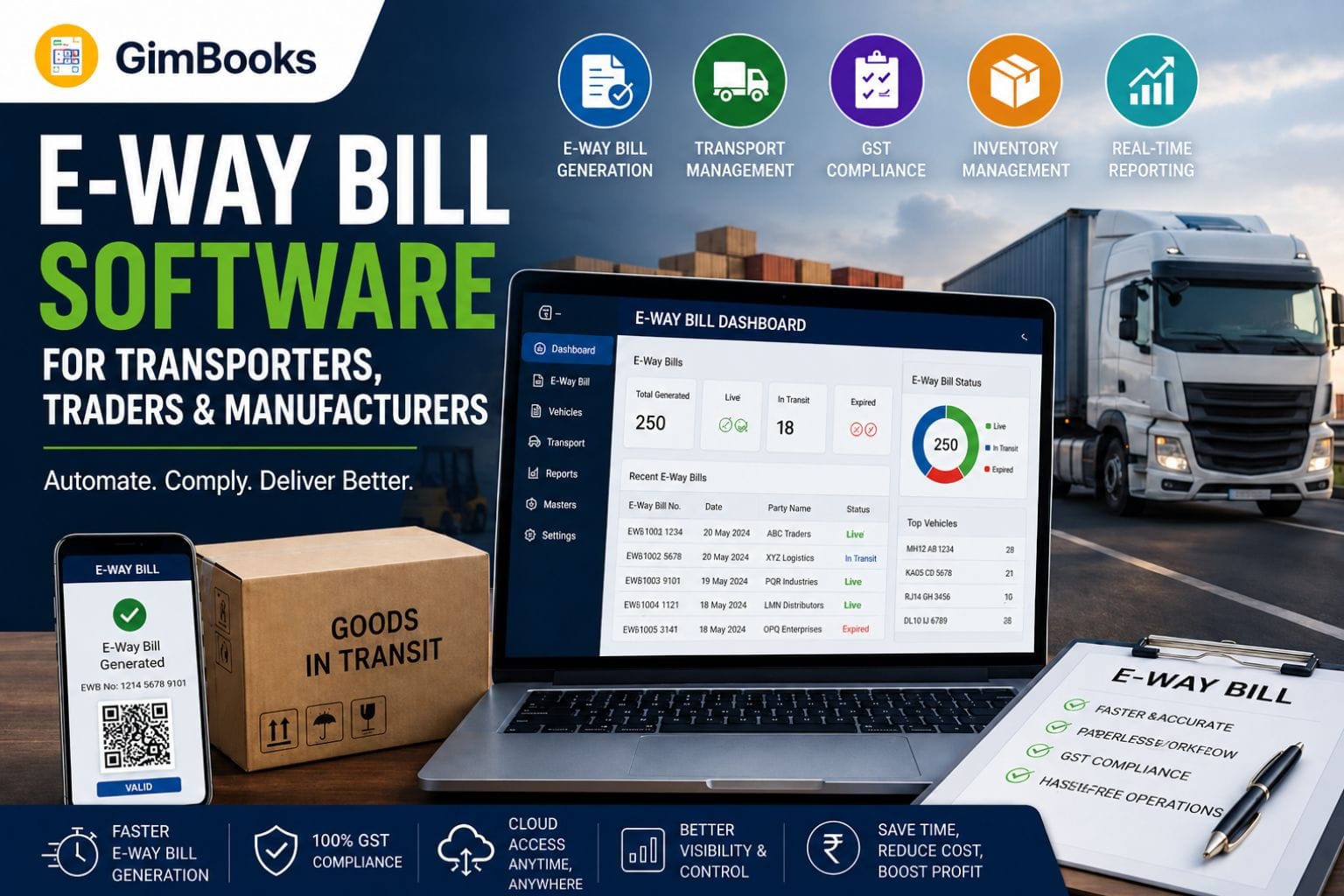
- E-Way Bill software automates e-Way Bill generation, reducing manual errors and compliance risks.
- Transporters, traders, and manufacturers benefit from faster dispatches and smoother logistics operations.
- Integrated billing, inventory, and e-Way Bill systems improve operational efficiency.
- Automation helps businesses avoid GST compliance issues and shipment delays.
- Modern software can connect invoicing, inventory management, and transportation workflows in one platform.
- Businesses handling frequent interstate or large-value goods movement should consider dedicated E-Way Bill software.
Introduction
For transporters, traders, and manufacturers, moving goods efficiently is just as important as selling them. However, GST compliance requirements have made logistics documentation more critical than ever. One missing or incorrect e-Way Bill can lead to shipment delays, penalties, and operational disruptions.
Many businesses still rely on manual processes to generate e-Way Bills, increasing the chances of errors and compliance issues. As supply chains become more complex in 2026, businesses need systems that can automate invoice generation, inventory updates, vehicle details, and e-Way Bill creation.
This guide explains how E-Way Bill software works, why it matters, what features to look for, and which solutions are best suited for transporters, traders, manufacturers, distributors, and MSMEs.
What Is an E-Way Bill?
An E-Way Bill is an electronic document required for the movement of goods under GST regulations when the value of goods exceeds the prescribed limit.
The document contains details about:
- Supplier
- Recipient
- Goods being transported
- Invoice details
- Transport vehicle information
- Consignment value
The purpose is to track the movement of goods and reduce tax evasion while improving transparency across supply chains.
Why E-Way Bill Compliance Matters in 2026
GST compliance is becoming increasingly digital. Authorities now have better visibility into invoice reporting, e-Invoicing, GST returns, and goods transportation.
Without proper E-Way Bill management, businesses may face:
- Delivery delays
- Compliance notices
- Shipment detention
- Financial penalties
- Customer dissatisfaction
- Operational bottlenecks
For growing businesses, automation is no longer optional—it is becoming essential.
Who Needs E-Way Bill Software?
Different businesses use E-Way Bill software for different reasons.
Transporters
Need fast vehicle updates, route tracking, and bulk E-Way Bill handling.
Traders
Require invoice-linked E-Way Bill generation and shipment management.
Manufacturers
Need integration between production, inventory, dispatch, and compliance systems.
Distributors
Require multi-location logistics coordination and frequent stock transfers.
MSMEs
Need affordable tools that simplify GST compliance without adding complexity.
What Problems Does E-Way Bill Software Solve?
Many businesses initially generate E-Way Bills manually through GST portals. While this works for occasional transactions, it becomes difficult as transaction volumes increase.
Common Challenges
Manual Data Entry
Entering invoice details repeatedly consumes time and increases error rates.
Vehicle Detail Updates
Transport details often change during transit.
Multiple Shipments
Managing dozens or hundreds of consignments manually becomes difficult.
Inventory Mismatch
Dispatch records and inventory systems often become disconnected.
Compliance Risks
Incorrect documentation can lead to delays and penalties.
Software automation addresses these issues by connecting billing, inventory, and logistics workflows.
Key Features to Look for in E-Way Bill Software
Before selecting a solution, businesses should evaluate whether it supports both compliance and operational requirements.
GST-Compliant E-Way Bill Generation
The software should automatically generate E-Way Bills from invoices.
Bulk E-Way Bill Creation
Useful for distributors, wholesalers, and manufacturers processing large shipment volumes.
Invoice Integration
Direct linkage between invoices and E-Way Bills eliminates duplicate data entry.
Inventory Management
Ensures stock records update automatically after dispatch.
Vehicle Management
Supports transporter details and vehicle number updates.
Real-Time Reporting
Provides visibility into shipments and compliance status.
Cloud Access
Allows teams to manage operations from multiple locations.
How E-Way Bill Software Works
Understanding the workflow helps businesses identify where automation creates value.
Step 1: Create Invoice
Generate GST invoice in billing software.
Step 2: Validate Information
System checks GSTIN, HSN codes, tax values, and consignee details.
Step 3: Generate E-Way Bill
Invoice information is pushed automatically for E-Way Bill creation.
Step 4: Assign Transport Details
Vehicle number and transporter details are added.
Step 5: Dispatch Goods
Shipment moves with valid compliance documentation.
Step 6: Track and Manage
Business can monitor dispatch status and compliance records.
Best E-Way Bill Software for Transporters, Traders and Manufacturers
There are several software options available in India. The best choice depends on business size, complexity, and operational needs.
1. GimBooks
Best For:
Traders, distributors, wholesalers, manufacturers, and MSMEs.
Key Features
- GST billing
- E-Way Bill support
- Inventory tracking
- Multi-business management
- Payment reminders
- Business reporting
- Mobile accessibility
- Cloud synchronization
Why It Stands Out
GimBooks is particularly useful for businesses that need an integrated solution for invoicing, inventory management, GST compliance, and logistics documentation without the complexity of large ERP systems.
2. TallyPrime
Best For:
Businesses already using Tally for accounting.
Pros
- Strong accounting capabilities
- GST compliance support
- Established ecosystem
Cons
- Learning curve for non-accounting users
- Limited mobility compared to cloud-native platforms
3. Zoho Books
Best For:
Service businesses and growing SMEs.
Pros
- Cloud-based
- Workflow automation
- Good integrations
Cons
- Manufacturing-specific features may require additional tools
4. Marg ERP
Best For:
Distribution-heavy operations.
Pros
- Inventory management
- Supply chain capabilities
- Distribution workflows
Cons
- More complex implementation
5. Vyapar
Best For:
Small businesses and local traders.
Pros
- Easy setup
- Simple billing
- Mobile-friendly
Cons
- Limited advanced logistics capabilities
Comparison Table
Best Software Based on Business Type
Different businesses have different operational priorities.
For Retail Traders
Look for:
- Simple GST billing
- Mobile invoicing
- Quick E-Way Bill generation
For Wholesalers
Prioritize:
- Bulk billing
- Inventory synchronization
- Multi-party pricing
For Manufacturers
Focus on:
- Production-to-dispatch workflows
- Inventory tracking
- E-Way Bill automation
For Distributors
Require:
- Route-based logistics
- Multi-location stock transfers
- Frequent E-Way Bill generation
Why Manufacturers Need Integrated Billing and E-Way Bill Systems
Manufacturers often handle large volumes of dispatches every day.
Without integration, teams must manually:
- Generate invoices
- Update inventory
- Create E-Way Bills
- Coordinate transportation
This increases administrative workload and delays dispatch operations.
Integrated systems automate these tasks and reduce operational friction.
Why GimBooks Fits Traders, Manufacturers and Distributors
Built for Daily GST and Logistics Workflows
Many small and mid-sized businesses need more than accounting software. They need tools that support the entire order-to-delivery process.
GimBooks helps businesses manage:
- GST billing
- Inventory management
- Business reporting
- Customer records
- Payment tracking
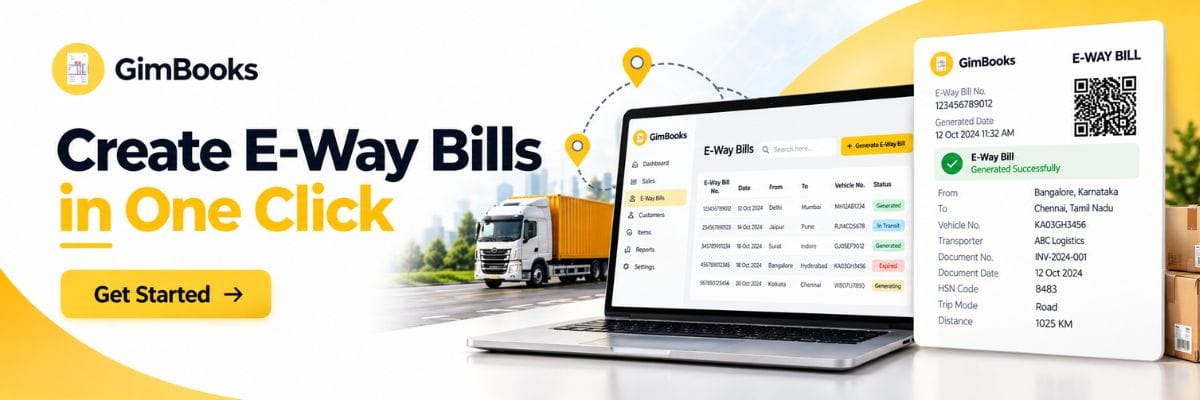
- E-Way Bill workflows
- Multi-business operations
For wholesalers, distributors, traders, and manufacturers, this creates a more connected workflow from invoice creation to goods dispatch.
Common E-Way Bill Mistakes Businesses Should Avoid
Using Incorrect Vehicle Numbers
Incorrect transport details can invalidate documentation.
Delayed E-Way Bill Generation
Bills should be generated before movement of goods.
Mismatched Invoice Data
Invoice and E-Way Bill information must align.
Manual Duplication
Repeated data entry often causes compliance errors.
Ignoring Expiry Timelines
E-Way Bills have validity periods that must be monitored.
Future of E-Way Bill Automation
The GST ecosystem continues moving toward greater automation.
Emerging trends include:
- AI-assisted compliance validation
- Automated logistics workflows
- Real-time shipment tracking
- Integration with e-Invoicing
- Predictive compliance alerts
- Unified GST compliance dashboards
Businesses investing in automation today will be better prepared for future GST requirements.
Conclusion
E-Way Bills have become a critical part of GST compliance and supply chain management. For transporters, traders, manufacturers, and distributors, manual processes often create delays, errors, and compliance risks.
Modern E-Way Bill software simplifies invoice management, shipment documentation, inventory tracking, and GST compliance through automation. Businesses that adopt integrated billing and logistics systems can improve operational efficiency, reduce compliance issues, and support long-term growth.
Choosing the right software depends on your business model, transaction volume, and logistics complexity. However, organizations that prioritize automation will be better positioned to manage compliance and scale efficiently in 2026 and beyond.
Simplify Billing, Inventory and E-Way Bill Compliance with GimBooks
Managing invoices, inventory, and transportation documents across multiple systems can slow down operations and increase compliance risks.
GimBooks helps businesses streamline:
- GST billing
- Inventory tracking
- Customer management
- Business reporting
- E-Way Bill workflows
- Multi-business operations
Whether you're a trader, wholesaler, manufacturer, or distributor, a connected billing platform can help improve operational efficiency while supporting GST compliance.
FAQs
What is the best E-Way Bill software for transporters?
The best software depends on operational needs. Transporters typically require vehicle management, bulk E-Way Bill generation, and logistics tracking capabilities.
Is E-Way Bill software necessary for traders?
While not mandatory, software significantly reduces manual work and helps ensure GST compliance.
Can E-Way Bills be generated directly from invoices?
Yes. Many modern billing platforms automatically generate E-Way Bills from GST invoices.
Which software is best for manufacturers?
Manufacturers often benefit from software that combines billing, inventory management, dispatch workflows, and compliance automation.
Does E-Way Bill software support inventory management?
Many modern platforms integrate inventory management with invoicing and E-Way Bill generation.
Can small businesses use E-Way Bill software?
Yes. Several affordable solutions are available specifically for MSMEs and growing businesses.