What Is PO Number in an Invoice?
A PO number is a reference number assigned to a purchase order by the buyer. It helps connect the buyer's order with the seller's invoice for simpler order verification, accounting, and payment processing simpler.

A PO number (Purchase Order number) is a unique reference number linked to a Purchase Order issued by a buyer before placing an order with a supplier.
When the supplier creates an invoice, they usually mention the PO number so the buyer can match the invoice with the original order.
Example
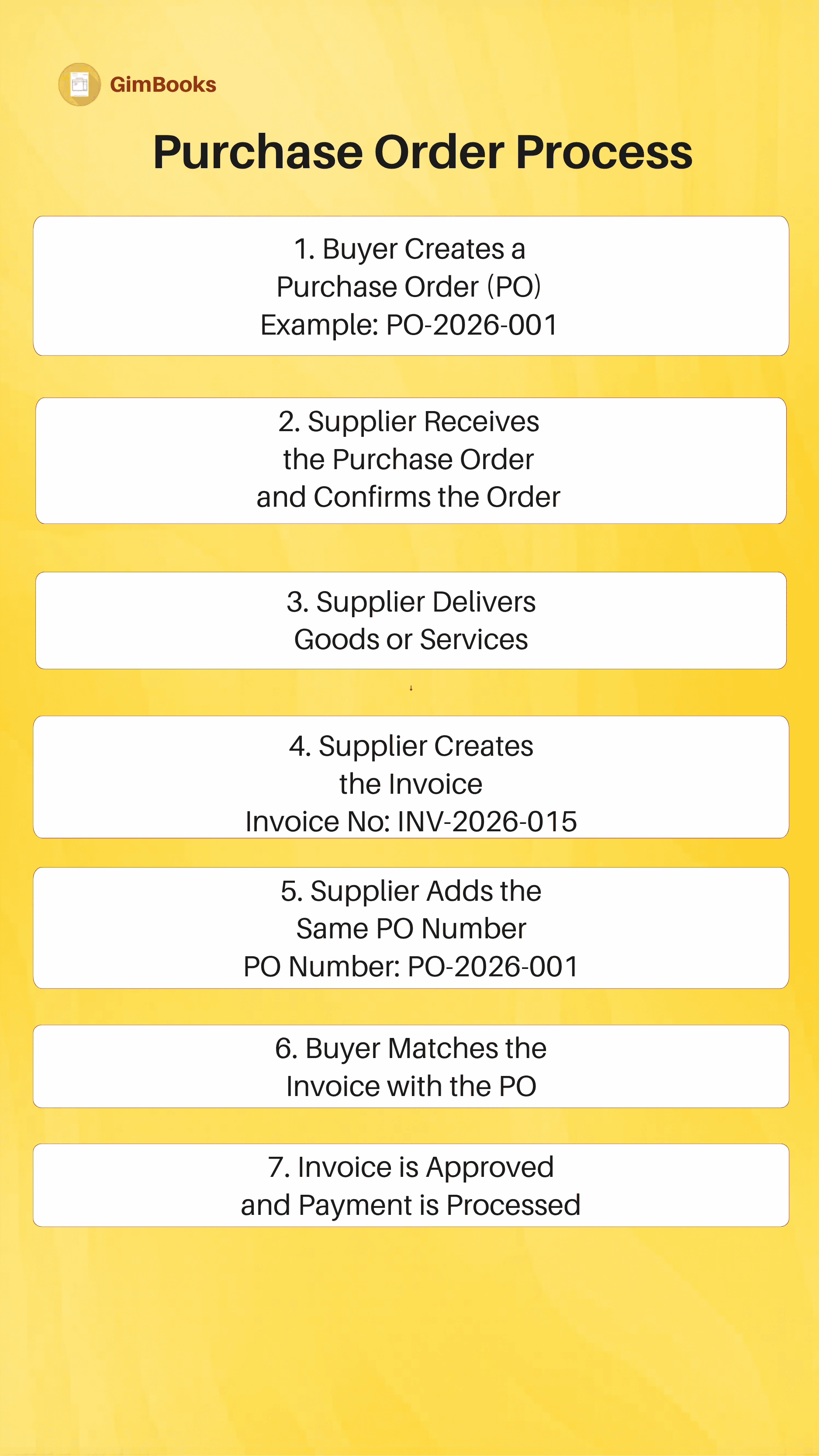
Here's a simple purchase flow:
- Buyer issues a Purchase Order
- PO Number: PO-2026-001
- Product: 100 office chairs
- Supplier delivers the order
- Supplier sends an invoice
- Invoice Number: INV-2026-015
Read more: What is the invoice number under GST - PO Number: PO-2026-001
- Invoice Number: INV-2026-015
The buyer can immediately verify that the invoice matches the approved purchase order.
| Purchase Order | Invoice |
|---|---|
| PO Number: PO-2026-001 | Invoice Number: INV-2026-015 |
| Issued by the buyer | Issued by the seller |
| Sent before goods/services are delivered | Sent after goods/services are delivered |
| Confirms what the buyer wants to purchase | Requests payment for what was supplied |
Why is a PO Number Important?
Adding the PO number to an invoice helps businesses:
- Match invoices with purchase orders
- Verify that the correct goods or services were delivered
- Speed up invoice approval and payment
- Reduce billing disputes
- Maintain accurate accounting records
Many medium and large businesses require suppliers to include the PO number on every invoice before processing payment.
Do Small business need PO Number on an Invoice?
You don't need to mention a PO number on every invoice.
Include it when your customer has issued a Purchase Order (PO) before you supply goods or services. Adding the PO number helps the customer match your invoice with their approved purchase order, making verification and payment much faster.
A PO number is commonly required when you're billing:
- Large companies
- Government departments
- Manufacturing businesses
- Corporate clients
- Businesses with procurement teams
If your customer doesn't issue purchase orders, you can usually leave the PO Number field blank.
Is a PO Number Mandatory on an Invoice?
Not always.
In India, a PO number is generally not mandatory under GST for a standard tax invoice. However, many businesses include it because it simplifies purchase tracking and internal approvals.
If you're selling to:
- Government departments
- Large corporations
- Manufacturing companies
- Enterprises with procurement teams
They'll often ask you to mention the PO number for business on your invoice.
Find free purchase order templates.
Where Does the PO Number Appear on an Invoice?
The Purchase order number in invoice is usually displayed near the top of the invoice, close to details like:
- Invoice Number
- Invoice Date
- Customer Name
- Payment Terms
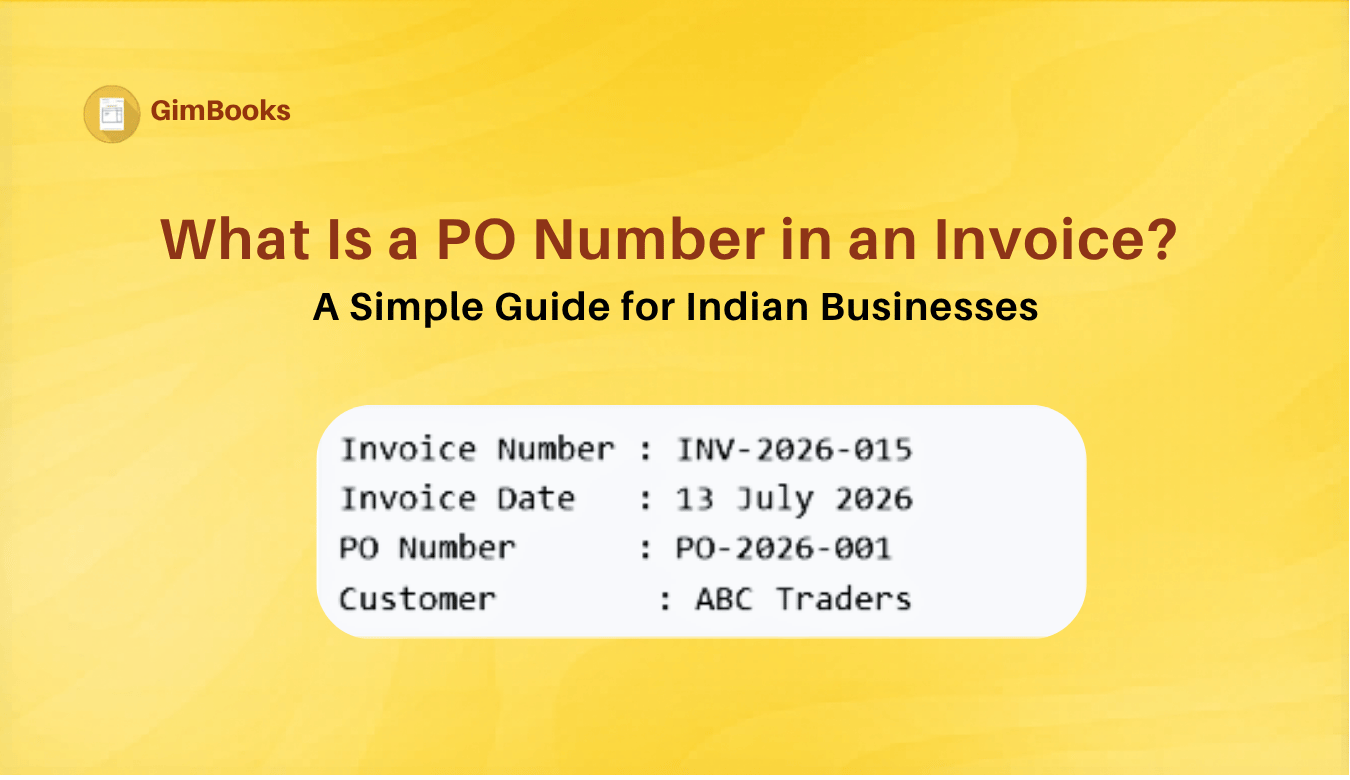
For example:
Invoice Number : INV-2026-015
Invoice Date   : 13 July 2026
PO Number      : PO-2026-001
Customer        : ABC Traders
Check How to add PO number in invoice quickly.
What Happens If PO Number is Missing from Invoice?
If your customer needs a PO number but it's missing from the invoice, then your customer can:
- Reject the invoice
- Ask you to issue a revised invoice
- Delay payment until the correct PO number is added
- Take longer to process the invoice internally
So, always ask your customer if they have a purchase order before raising the invoice.
PO Number vs Invoice Number
| PO Number | Invoice Number |
|---|---|
| Created by the buyer | Created by the seller |
| Generated before the purchase | Generated when billing the customer |
| Used to authorize a purchase | Used to request payment |
| One PO may be linked to one or more invoices | Every invoice has its own unique invoice number |
Can You Add a PO Number in GimBooks?
Yes. If your customer has issued a purchase order, you can include the PO number while creating the invoice in GimBooks.
This makes it easier for your customer to reconcile the invoice with their purchase order and can help speed up payment processing.
How to Add a PO Number in GimBooks
If your customer has shared a Purchase Order (PO) before placing an order, you can mention the same PO number while creating the invoice in GimBooks.
This helps your customer match your invoice with their purchase order, making invoice verification and payment processing much smoother.
To add a purchase order number in GimBooks, follow these simple steps with the Purchase Order tutorial:
How to Create Purchase Order in GimBooks
- Open the GimBooks app.
- Tap Sales and select Create Invoice.
- Enter your customer's details and add the products or services.
- Scroll to the PO Number field.
- Enter the Purchase Order number exactly as shared by your customer (for example, PO-2026-001).
- Review the invoice and tap Save or Share.
Your invoice will now include the PO number, making it easier for your customer to verify the order and process payment.
Common Mistakes to Avoid with PO number
When using PO numbers, avoid these common mistakes:
- Creating your own PO number instead of using the customer's PO number
- Entering the invoice number in the PO Number field
- Typing the wrong PO number
- Leaving the field blank when your customer requires it
- Using an expired or cancelled purchase order
Double-checking the PO number before sending the invoice can help avoid payment delays.
Conclusion
Many companies, manufacturers, wholesalers, and government organizations process invoices only after matching the PO number, invoice, and delivered goods. Adding the correct PO number can help reduce back-and-forth communication and speed up payments.
With GimBooks, adding a PO number is simple. While creating an invoice, you can enter the PO number in the invoice along with your invoice details, helping you keep your invoices organized and making it easier for your customers to match and approve payments.
FAQ for PO number in Invoice
1. What is a PO number in an invoice?
A PO (Purchase Order) number is a unique reference number assigned to a purchase order created by the buyer. Suppliers mention this number on the invoice so buyers can match the invoice with the original order before making payment.
2. Is a PO number the same as an invoice number?
No. A PO number is generated by the buyer before purchasing goods or services, while an invoice number is generated by the seller when requesting payment. They serve different purposes.
3. Is a PO number mandatory on an invoice in India?
For most GST invoices, a PO number is not mandatory. However, many businesses, government organizations, and large enterprises require suppliers to mention the PO number for internal approval and payment processing.
4. Where can I find the PO number on an invoice?
The PO number is usually displayed near the top of the invoice alongside the invoice number, invoice date, customer details, and payment terms. Its exact placement may vary depending on the invoice format.
5. Why do businesses include a PO number on invoices?
Businesses include a PO number to:
- Match invoices with purchase orders
- Verify ordered items
- Reduce billing disputes
- Speed up payment approvals
- Improve accounting records
6. Can one purchase order have multiple invoices?
Yes. A single purchase order can be linked to multiple invoices if goods or services are delivered in parts or billed over multiple stages.
7. How do I add a PO number to an invoice?
Most billing and accounting software lets you enter the PO number while creating an invoice. Simply enter the customer's purchase order number in the designated PO Number field before saving or sharing the invoice.
8. What is an example of a PO number?
A PO number can follow any format defined by the buyer, such as:
- PO-2026-001
- PUR-45892
- ABC/PO/1025
The format varies from one organization to another.
9. What happens if I don't mention the PO number on an invoice?
If your customer requires a PO number, the invoice may be rejected or payment could be delayed until the correct purchase order reference is added.
10. Who generates the PO number?
The buyer creates the purchase order and assigns the PO number. The seller references that same PO number while issuing the invoice.