
GST Filing Last Date This Month: GSTR-1, GSTR-3B, QRMP & MSME Compliance Guide
Check the GST filing due date for March 2026 including GSTR-1, GSTR-3B, GST payment deadlines, QRMP dates, late fees, GST 2.0 updates, new GST rates 2026, and GST portal login steps. Avoid penalties and file on time.


Complete MSME Guide on GST Filing Date, GST 2.0 Updates, New GST Rates & Compliance
GST filing due dates change based on the return type, filing frequency, and whether your business files monthly or under the QRMP scheme. This guide covers the current GST filing last date, GSTR-1 due date, GSTR-3B due date, QRMP deadlines, GST payment dates, late fees, and MSME compliance steps for FY 2026–27.
We have also included a March 2026 GST filing recap because many businesses search for year-end GST return deadlines and extension updates.
GST Due Dates This Month: June 2026
Why GST Filing in March Is Important for Your Business
March GST returns impact:
- Financial year closing
- ITC matching and reconciliation
- Income tax and audit preparation
- Business creditworthiness
- Vendor relationships
- Future GST compliance
If your returns are accurate now, your entire year-end accounting becomes smooth.
GST Filing Dates for March 2026
Here’s a simple GST calendar you can follow.
Monthly GST Process for March Filing
| Week | Key Activities | Why It Matters |
|---|---|---|
| Week 1 of April | Collect sales and purchase invoices Download GSTR-2B Check ITC eligibility | Helps you understand your tax position early and avoid last-minute surprises. |
| Week 2 | Reconcile invoices Correct errors Update accounting records | Reduces mismatch, prevents ITC loss, and ensures accurate data before filing. |
| Week 3 | Finalise GSTR-1 Review tax liability | Gives clarity on outward supplies and tax payable so you can plan cash flow. |
| Week 4 | File GSTR-3B Pay tax Download acknowledgement | Ensures compliance, avoids penalties, and keeps records ready for audit and future reference. |
 Noorleen Kaur Bhatia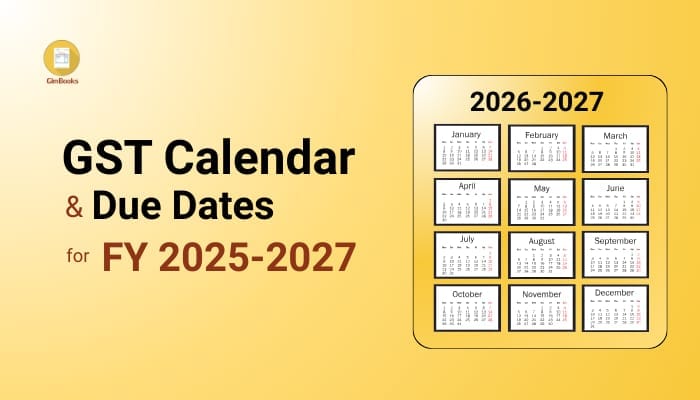
Year-end GST return filing Dates
GST Return Filing Due Dates for March 2025-2026
Read more about late fees, penalty on late filing of GSTR-3b, and more.
GST Due Dates for March 2026
| GST Return / Payment | Who Should File | Due Date |
|---|---|---|
| GSTR-1 (Monthly) | Businesses filing GST monthly | 11 April 2026 |
| GSTR-1 (QRMP – Jan to Mar quarter) | Businesses under QRMP scheme | 13 April 2026 |
| GSTR-3B (Monthly) | Monthly GST filers | 20 April 2026 |
| GSTR-3B (QRMP) | QRMP taxpayers (based on state) | 22 or 24 April 2026 |
| GST Payment with GSTR-3B | Monthly filers | 20 April 2026 |
| PMT-06 (March tax – QRMP) | QRMP taxpayers | 25 April 2026 |
Access GST Calendar & due dates here to stay compliant throughout the year!
GSTR-3B Due Date for Monthly and Quarterly Filers
- Monthly filers: 20th of the next month
- QRMP filers: 22nd or 24th after the quarter
- State-wise Category X / Category Y explanation
- Tax payment happens with GSTR-3B for regular monthly filers
- QRMP taxpayers pay monthly through PMT-06
The official GST tutorial confirms GSTR-3B due dates as the 20th for monthly filers and 22nd/24th for quarterly filers.
GSTR-1 Due Date for Monthly and QRMP Taxpayers
- Monthly GSTR-1 due date: 11th of next month
- QRMP GSTR-1 due date: 13th after the quarter
- IFF optional monthly filing under QRMP
- Why GSTR-1 filing affects GSTR-2B and ITC matching
The official GST tutorial confirms GSTR-1 due dates as the 11th for monthly filers and 13th after the quarter for quarterly filers.
GST Quarterly Return Due Date Under QRMP Scheme
GST Due Date Extension: How to Check Official Updates
GST return due dates can be extended by the government through official notifications issued on the recommendations of the GST Council. These extensions are usually announced by the Central Board of Indirect Taxes and Customs (CBIC) and are reflected on the GST portal.
Keep in mind that an extension may not apply to all taxpayers. It can be limited to:
- A specific GST return (such as GSTR-1, GSTR-3B, GSTR-9, etc.)
- Taxpayers in particular states or union territories
- A specific category of taxpayers (for example, QRMP taxpayers or regular monthly filers)
- A particular tax period or filing month
Because extension notifications often contain specific conditions, taxpayers should always verify the applicable due date before filing.
How to Verify the Final Due Date
Before submitting a return:
- Log in to the official GST portal.
- Check the latest notifications, advisories, and announcements.
- Review the due date displayed in your GST return dashboard.
- Confirm whether any extension applies to your return type, state, taxpayer category, or filing period.
The due date shown on the GST portal should be treated as the final reference for compliance.
March 2026 Extension Recap
For the March 2026 tax period, the government extended the due date for filing GSTR-3B from 20 April 2026 to 21 April 2026 through Notification No. 01/2026-Central Tax. The extension was granted following technical issues reported on the GST portal and applied to eligible taxpayers required to file monthly GSTR-3B returns.
What Is GST 2.0 and Why It Matters
The government is working on a stronger, tech-driven GST system known as GST 2.0. The aim is:
- Real-time invoice tracking
- Automated ITC matching
- Stronger fraud detection
- Faster refunds
- Simplified compliance
What this really means is businesses must adopt digital GST billing platform to stay ready.
What Businesses Should Know about New GST Rates
The new GST rate impacts every industry differently. The full new GST rates list 2026 is based on-
Changes in services tax slabs.
Sector-based revisions.
Simplification of tax brackets.
Compliance for e-invoicing and e-way bills.
Staying updated helps avoid incorrect tax rates and penalties.
Updated GST rules help businesses to follow compliance without affecting their cash flow.
Businesses in focus for GST E-Way Bill in March
The Goods and Services Tax Network keeps a close focus on logistics compliance closely during March. Logistics businesses must follow the following important steps:
- Ensure correct invoice and vehicle details.
- Match the e-way bill with GSTR-1.
- Avoid last-minute generation.
- Track validity for long-distance goods.
Mistakes here often trigger GST notices. So, follow the step-by-step process for GST return filing here and avoid GST notices.
GST Return Filing Process for MSMEs
| Week | Key Activities | Why It Matters |
|---|---|---|
| Week 1 of April | Collect sales and purchase invoices Download GSTR-2B Check ITC eligibility | Helps you understand your tax position early and avoid last-minute surprises. |
| Week 2 | Reconcile invoices Correct errors Update accounting records | Reduces mismatch, prevents ITC loss, and ensures accurate data before filing. |
| Week 3 | Finalise GSTR-1 Review tax liability | Gives clarity on outward supplies and tax payable so you can plan cash flow. |
| Week 4 | File GSTR-3B Pay tax Download acknowledgement | Ensures compliance, avoids penalties, and keeps records ready for audit and future reference. |
Read more: step-by-step GSTR filing.
This GST filing process reduces errors and stress. Read below to know more about how GST filing affects various MSMEs.
GST for Small Manufacturers: Production vs Tax Planning
Manufacturers deal with GST challenges because they handle raw materials, finished goods, and inventory tracking, and the burden of compliance falls on their shoulders in the month of March.
Problem faced by manufacturers at GST return filing time:
A furniture manufacturer purchases raw materials in March to increase production, but due to incorrect planning, he faces:
GST increases on purchases.
Finished goods remain unsold.
Cashflow gets blocked due to inventory.
High working capital needs
ITC blocked
Production vs demand mismatch
Seasonal fluctuations
At the same time, GST payment is due.
Solutions for manufacturers at the time of GST return filing-
Plan procurement
Monitor ITC
Align production with demand
Avoid excess stock
This reduces the tax burden and improves liquidity.
Use the best GST billing software for manufacturers to stay compliant and avoid GST billing errors.
GST for Retailers in March: Managing Cash and Inventory
For retailers, March is a high-pressure month. Sales increase due to year-end clearance and festive demand. But with higher sales comes higher GST liability. Example-
A clothing retailer runs discounts in March to clear old stock. Sales go up, but they forget to match purchase invoices.
Problems Faced by Retailers while filing GST Return in March
When filing GST:
- ITC is lower than expected
- Tax payment becomes higher
- Cash flow gets blocked
The stress begins when the business needs working capital for the April inventory.
Retailers often use cash sales.
And if GST is not planned:
- Daily cash collections are used for tax
- Stock purchase is delayed
- Supplier relationships get affected
Solutions for Retailers at the time of GST return filing-
Use a GST billing software for retailers in India.
Track GST daily via invoices.
Monitor ITC regularly.
Plan year-end stock and tax together
This reduces last-minute surprises.
GST for Service Businesses: Income Mismatch and ITC Issues
Let's assume that a fireproofing service provider raises invoices in March, but clients pay in May. However, GST must be paid in April.
This creates:
Tax outflow before cash inflow
Pressure on the bank balance
Credit card usage for GST
Problems Faced by service businesses while filing GSTR-
- Delayed client payments
- ITC tracking
- Reverse charge confusion
- Multiple state clients
Solutions for service business during GST return filing-
Regular reconciliation
Clear invoicing terms
Monthly GST planning
Tracking receivables
Planning GST based on invoices instead of payments is critical.
 Noorleen Kaur Bhatia
Best GST accounting software for service business in India
GST for Traders: Vendor Pressure and ITC Matching
Traders depend heavily on vendors and ITC. In March, vendor compliance is very important.
Example:
A wholesale trader purchases goods in March, but the supplier files GST late.
Trending - TDS & TCS Rate Chart
Problems faced by Traders at the time of GST return filing
ITC not available.
Higher tax payment.
Working capital gets blocked.
This can disrupt the entire supply chain.
And the business will have to face risks like vendor non-compliance, mismatch in GSTR-2B, high GST payable, and cash flow crisis.
Solution for GST Return Filing Problems for Traders
- Work only with compliant suppliers
- Monitor vendor GST filing
- Reconcile monthly
- Track ITC before purchase
This protects margins.
 Noorleen Kaur Bhatia
Boost cash flow and reduce late payments
To avoid these problems, choose the top GST billing software for sole traders in India so you can avoid delays and generate GST-ready invoices without stress.
Avoid Common GST Mistakes Businesses Make in March
Businesses make the following mistakes while filing GST returns:
- Wrong tax rates.
- Missing invoices.
- Duplicate entries.
- ITC without goods.
- Mismatch with GSTR-2B.
- Errors in e-way bills.
How to Stay Compliant Under the New GST System
Using cloud-based GST billing software can help small businesses stay compliant:
- To keep track of GST 2.0 changes and payments on GST invoices.
- Syncs GST invoice and documents instantly.
- Share Payment reminders.Maintain digital records.
- Add new GST rates automatically.
- This reduces manual errors.
- Generate GST reports quickly.
Learn - How to Download GST Certificate and GST Number
Conclusion for March GST Return Filing
GST return filing for March is about financial planning, risk management, and business credibility for small businesses. To make compliance easy and stay stress-free during GST filing in March, use GST billing software and follow updates like new GST rates under GST 2.0.
Because GST compliance is not just a legal requirement for retailers, service providers, traders, and manufacturers.