Don’t Miss These 7 Credit Schemes in 2026 (for MSMEs)
Struggling with cash flow or delayed payments? Union Budget 2026 brings new credit opportunities for MSMEs, including collateral-free loans, growth funds, export financing, and faster payments through platforms like TReDS and institutions such as SIDBI.

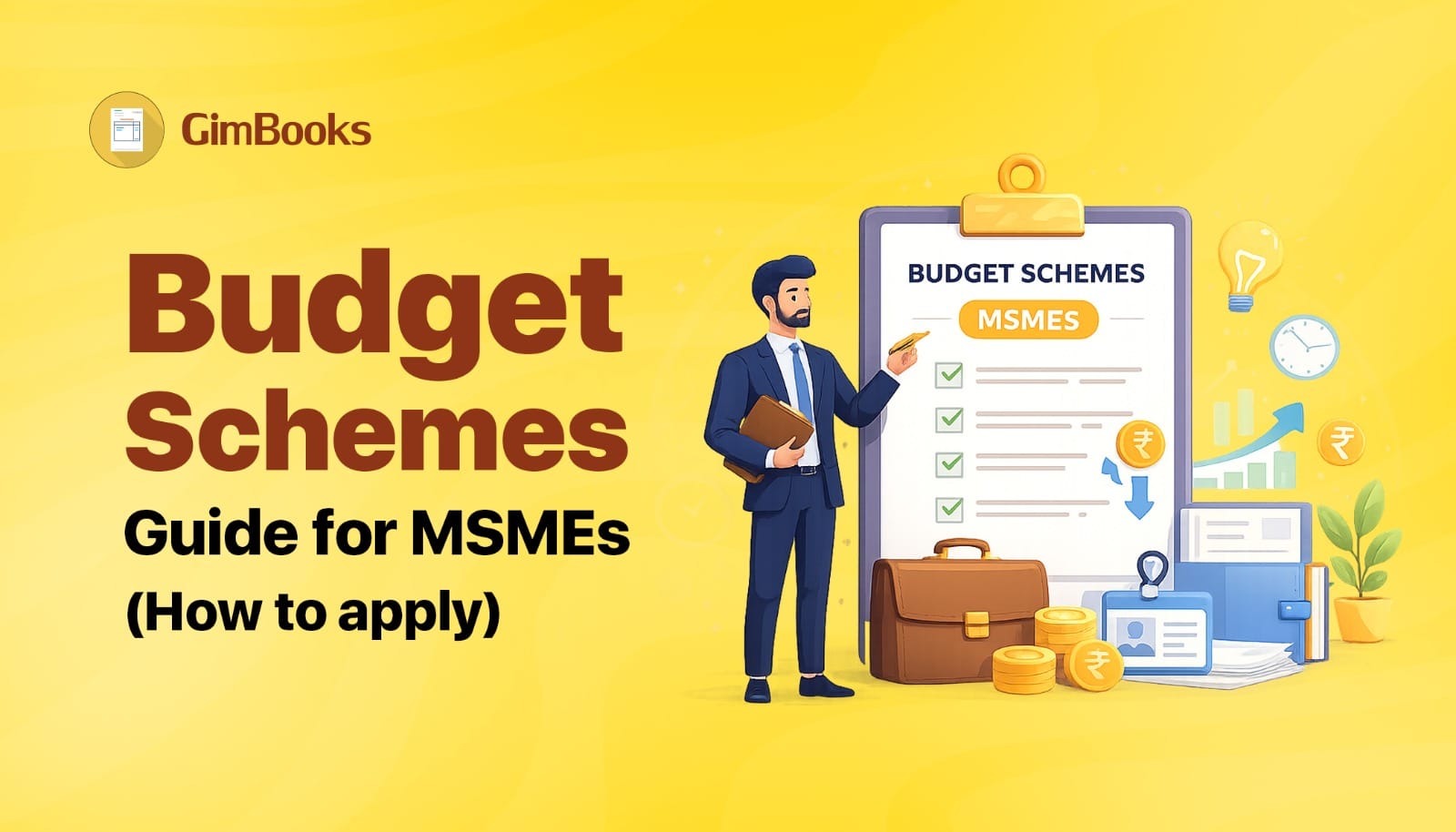
MSME credit expansion is now the backbone of industrial growth. What this really means is simple. The government is shifting from short-term relief to long-term capital, liquidity, and growth support.
MSME loans have become the biggest reason behind industrial lending growth. This is happening because the government has increased credit guarantees and raised loan limits under the new MSME classification.
Let’s look at the schemes and initiatives MSMEs should focus on in 2026.
Top 7 Government-Backed Budget 2026 Credit Schemes MSMEs Should Use
| Scheme / Initiative | Key Features | Why It Matters for MSMEs | Who Should Use It | Action MSMEs Should Take |
|---|---|---|---|---|
| SME Growth Fund (₹10,000 Cr) | Growth-stage capital, risk sharing, focus on scalable businesses | Helps MSMEs move beyond working capital and focus on expansion and innovation | Scaling businesses, exporters, manufacturing, tech MSMEs | Maintain GST compliance, formal books, and clear financials to qualify |
| Expanded Credit Guarantee Framework | Collateral-free loans with stronger government backing | Easier access to loans, especially for first-time borrowers and small businesses | Micro and small businesses, rural entrepreneurs, new founders | Build credit history and maintain digital financial records |
| SIDBI Lending Push | Capital infusion into MSME-focused institutions like SIDBI | More liquidity in the ecosystem, better loan availability and lower rates | Manufacturing MSMEs, startups, cluster-based industries | Explore SIDBI and NBFC lending instead of traditional banks |
| Mandatory TReDS Integration | Invoice discounting through platforms like TReDS | Faster payments, reduced dependency on loans, improved working capital | MSMEs supplying to corporates, government vendors | Use digital invoicing and onboard on TReDS platforms |
| Export Credit & Supply Chain Financing | Credit, guarantees, and incentives for export-focused MSMEs | Encourages global expansion and reduces financial risk | E-commerce exporters, D2C brands, small manufacturers | Focus on export documentation and compliance |
| Equity & Risk Capital Support | Shift from debt to equity financing | Reduces EMI pressure and supports long-term growth | Fast-growing MSMEs, startups, digital businesses | Improve business valuation and investor readiness |
| Inclusive Credit Programs | Special schemes for women, SC, ST entrepreneurs | Financial inclusion and easier credit for underserved segments | Women-led and first-generation entrepreneurs | Leverage priority lending and government-backed schemes |
How to Apply for Top Government-Backed Credit Schemes for MSMEs in 2026
Most small businesses don’t miss funding because they are not eligible. They miss it because they don’t know the process. So, we are sharing a step-by-step process so you can apply for the credit scheme and get approved.
Step 1: Complete Your Basic Registrations First
Before applying for any government credit scheme, make sure your business is formal. This is the first thing lenders check.
✔ Get your Udyam Registration.
✔ Maintain GST registration and file returns regularly.
✔ Open a current account in your business name.
✔ Link Aadhaar and PAN.
These steps increase trust and improve your loan eligibility.
Step 2: Prepare Key Financial Documents
Most MSMEs get rejected because of poor documentation, not because of low income.
Keep these ready:
- GST returns.
- Bank statements (last 6–12 months).
- Income tax returns.
- Profit and loss statement.
- Balance sheet.
- Sales invoices and purchase records.
Using accounting tools like GimBooks can help you generate these reports instantly and avoid delays during loan approval.
Step 3: Build a Basic Credit History
If you are a new entrepreneur, start small.
✔ Take a small working capital loan.
✔ Use business credit cards.
✔ Pay EMIs on time.
A strong repayment record makes it easier to access larger schemes such as the SME Growth Fund and collateral-free loans.
Step 4: Choose the Right Credit Option
Different credit schemes serve different needs. Pick based on your business goal.
| Business Need | Best Scheme |
|---|---|
| Daily cash flow | Invoice discounting on TReDS |
| Expansion | SME Growth Fund |
| New business | Credit guarantee schemes |
| Export growth | Export credit support |
| Manufacturing | SIDBI and NBFC lending |
This step ensures you apply to the right lender and avoid unnecessary rejections.
 Noorleen Kaur Bhatia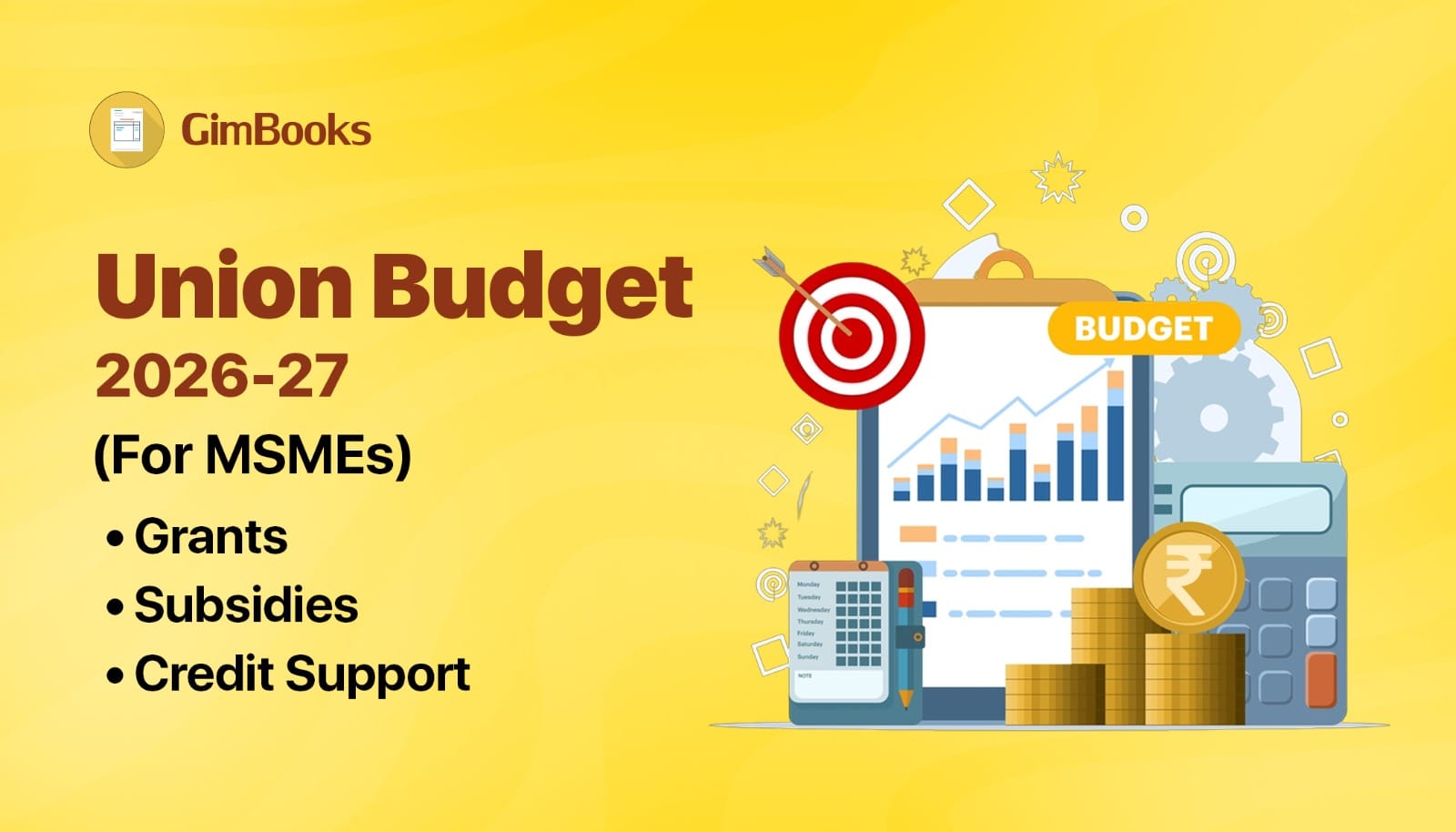
Find credit schemes in budget 2026
Step 5: Apply Through the Right Channel
You can apply through:
- Public and private banks.
- NBFCs.
- MSME-focused institutions such as SIDBI.
- Online lending platforms.
- Government portals and partner networks.
Many lenders now offer quick digital applications and faster approvals.
Step 6: Improve Your Approval Chances
Here’s what increases your chances in 2026:
✔ Digital billing and financial records.
✔ Regular GST compliance.
✔ Stable business cash flow.
✔ Strong repayment history.
✔ Transparent income reporting.
The more organised your business is, the faster the approval.
Step 7: Track and Use Funds Smartly
Once you get the loan:
- Use it only for business growth.
- Improve inventory and operations.
- Invest in technology and automation.
- Focus on exports and scaling.
This improves your chances of getting larger funding in the future.
Important Points to Remember
| Insight | What This Means for MSMEs |
|---|---|
| Credit expansion is driving industrial growth | Businesses that access formal credit will scale faster |
| Formalisation is now essential | GST, digital invoices, and Udyam registration improve loan eligibility |
| Liquidity is a competitive advantage | Faster payments and invoice financing reduce borrowing costs |
| Focus shifting from subsidies to capital | MSMEs must move from survival mode to growth mode |
MSME Checklist Before Applying for Schemes in 2026
| Priority | What MSMEs Should Do |
|---|---|
| Formalisation | Complete Udyam Registration and maintain GST compliance |
| Digital finance | Use accounting and billing tools to maintain clean records |
| Invoice financing | Use TReDS before taking high-interest loans |
| Growth funding | Explore equity and SME funds for expansion |
| Export readiness | Focus on global markets and supply chains |
Conclusion on Applying for Budget 2026 Schemes
In 2026, lenders are focusing more on organised data and digital behaviour. Businesses that track invoices, payments, and cash flow properly will get priority access to credit.
This is why many MSMEs are moving toward digital GST billing software that helps them stay financially ready and apply for schemes with confidence.