
Voluntary e-Way Bill Closure Facility in 2026
The GSTN has introduced the Voluntary e-Way Bill Closure Facility to help businesses manage inactive or unused e-Way Bills more effectively.

What Is the Voluntary e-Way Bill Closure Facility?
The Voluntary e-Way Bill Closure Facility allows taxpayers to voluntarily close e-Way Bill when the transportation process has stopped, changed, or is no longer valid.
Earlier, many businesses faced situations where
- Goods were not dispatched
- Shipment got cancelled
- Transport plans changed
- Vehicle issues delayed movement
- The buyer cancelled the order
- Goods returned before transport started
But the e-Way Bill remained active in the GST system.
Now, businesses can close such e-way bills voluntarily instead of leaving unnecessary records open.
This creates better transparency in goods movement and helps maintain cleaner GST records.
Why Was This New e-Way Bill Facility Introduced?
Many transport-related issues happen in real business life.
Example:
Suppose a wholesaler in Delhi generates an e-Way Bill to send goods worth ₹3 lakh to a retailer in Jaipur. Before dispatch, one of the following happens:
The buyer postpones the delivery
The vehicle is unavailable
The goods are damaged before shipment
The order is cancelled
Earlier, the e-Way Bill would remain active despite no movement of goods that led to
- Confusion during GST inspections.
- Mismatches in transport records.
- Queries from tax authorities.
- Compliance issues during audits.
To solve such practical business problems, GST authorities introduced the Voluntary e-Way Bill Closure Facility.
 Noorleen Kaur Bhatia
Ewaybill update
The aim is simple:
If transportation is no longer happening, businesses should be able to officially close the e-Way Bill.
For Which Businesses is This GST e-WayBill Update Meant?
Read more updates: E-waybill update 2026 for transporter, wholesaler, trader, exporter, and manufacturer.
Voluntary Closure vs e-Way Bill Cancellation
Many business owners may confuse cancellation with closure.
But both are different.
| Feature | e-Way Bill Cancellation | Voluntary e-Way Bill Closure |
|---|---|---|
| Used For | Wrong details entered while generating the e-Way Bill | Goods movement did not happen after the e-Way Bill was generated |
| Example | Incorrect GSTIN, invoice number, or transport details | Order cancelled, delivery postponed, or vehicle unavailable |
| Purpose | To cancel an e-Way Bill created with incorrect information | To close an active e-Way Bill when goods are not transported |
| Outcome | Invalidates the wrongly generated e-Way Bill | Updates records to reflect that the planned movement did not occur |
Understanding this difference is important because e-waybill cancellation is meant for errors, while voluntary closure is meant for situations where the shipment does not take place.
 Noorleen Kaur Bhatia
E-invoice to e-waybill cancellation
How Does Voluntary Closure Help Businesses?
Here are some practical problems this GSTIN e-waybill closure update will solve for business.
1. Keeps Goods Movement Records Correct
When goods are not being moved, closing the e-Way Bill helps keep GST records correct. Follow the correct e-waybill GST format.
2. Avoids Confusion During GST Checks
Closing unused e-Way Bills helps avoid confusion during GST checks and keeps records clear.
3. Improves Business Record Keeping
This facility helps in tracking cancelled shipments easily and helps maintain clear records. Clear records are always better during:
GST assessments
Internal audits
Tax verification
When Should You Use Voluntary e-Way Bill Closure?
Here are common situations where businesses may understand how to use e-Way Bill closure facility.
- Goods Were Never Sent
- The invoice was prepared, but dispatch never happened.
- Buyer Cancelled the Order
- Customer postponed or cancelled the delivery.
- Vehicle Problems
- Transport got delayed due to vehicle breakdown.
- Dispatch Plan Changed
- The shipment was rescheduled.
- Export Shipment Delay
- Logistics or customs issues delayed export movement.
How to Voluntarily Close e-WayBill
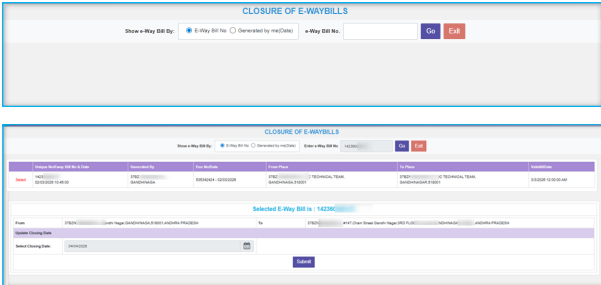
This is how the voluntary e-waybill closure option looks like.
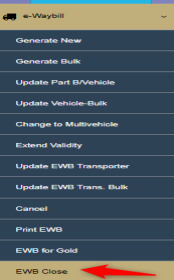
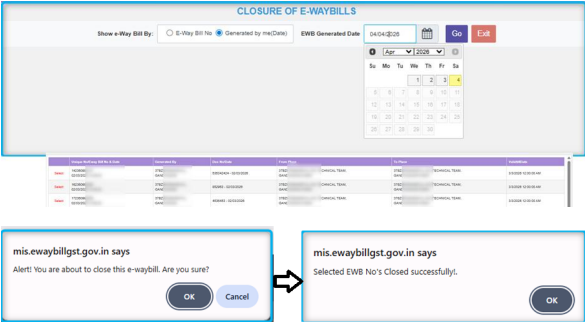
A) E-WayBill Closure by existing e-Way Bill user has been logged in by using:
i) E-WayBill Number
ii) E-WayBill Generated Date
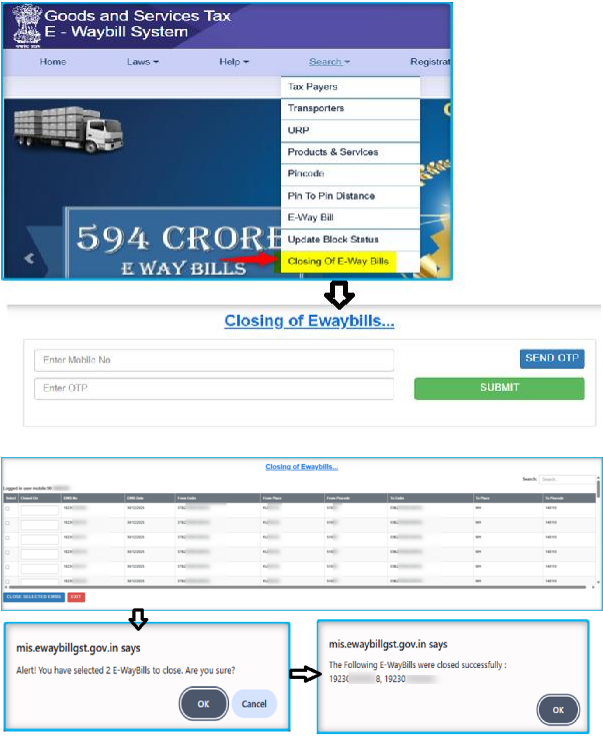
This is how the e-waybill closure process looks:
Login > Closing of E-Way Bills > Submit > Close selected E-Way Bills > Successful Closure > Okay
Benefits of Voluntary e-Way Bill Closure for Businesses
Benefits of Voluntary e-Way Bill Closure for businesses include:
-
Better GST Compliance
-
Records remain updated and transparent.
-
Cleaner Shipment Tracking
-
Only actual transportation remains active.
-
Less Risk During GST Checks
-
Fewer chances of confusion during verification.
-
Easier Record Management
-
Businesses can track cancelled dispatches better.
-
Helpful for Daily Shipment Businesses like-
  FMCG wholesalers
  Textile traders
  Hardware businesses
  Electronics distributors
  Manufacturers
  Exporters
Avoid these e-Way Bill Closure Mistake
- Ignoring Active e-Way Bills
Do not forget old shipment records.
-
Review active e-Way Bills regularly.
-
Closing Genuine Shipments by Mistake
Only close bills when transportation genuinely stops.
- Not Confirming with Transporter
Always verify shipment status before closure.
- No Proper Documentation
Keep proper records of cancelled dispatches.
This helps during GST audits.
Small GST updates can create big compliance issues if ignored.
Businesses that stay updated usually avoid unnecessary problems.
Conclusion on EwayBill Closure Update in 2026
The Voluntary e-Way Bill Closure facility is a useful update for businesses when shipments get cancelled, delayed, or never take place. Instead of keeping inactive e-Way Bills active, businesses can now close them when goods are not transported.
Using GST invoicing software for e-Way Bill management can help businesses maintain accurate records, stay GST-compliant, and track shipments with greater ease.
Frequently Asked Questions for Voluntary E-waybill Closure
What is voluntary e-Way Bill closure?
It is a facility that allows businesses to close an e-Way Bill if transportation no longer happens.
Is this facility useful for traders?
Yes. Traders, wholesalers, transporters, exporters, and manufacturers may benefit.
What is the difference between cancellation and closure?
Cancellation is for mistakes in the bill. Closure is for stopped transportation.
Can exporters use this facility?
Yes. Exporters facing shipment delays or cancelled movement may find it useful.
Does this ewaybill update improve GST compliance?
Yes. Accurate shipment records improve transparency and reduce confusion.