How Union Budget 2026-27 Expands Grants, Credit and Subsidies for Small Businesses
Union Budget 2026-27 brings major support for small businesses through grants, easier loans, faster payments, and export incentives. From collateral-free credit to growth funds and TReDS financing, here’s how MSMEs can benefit and apply.

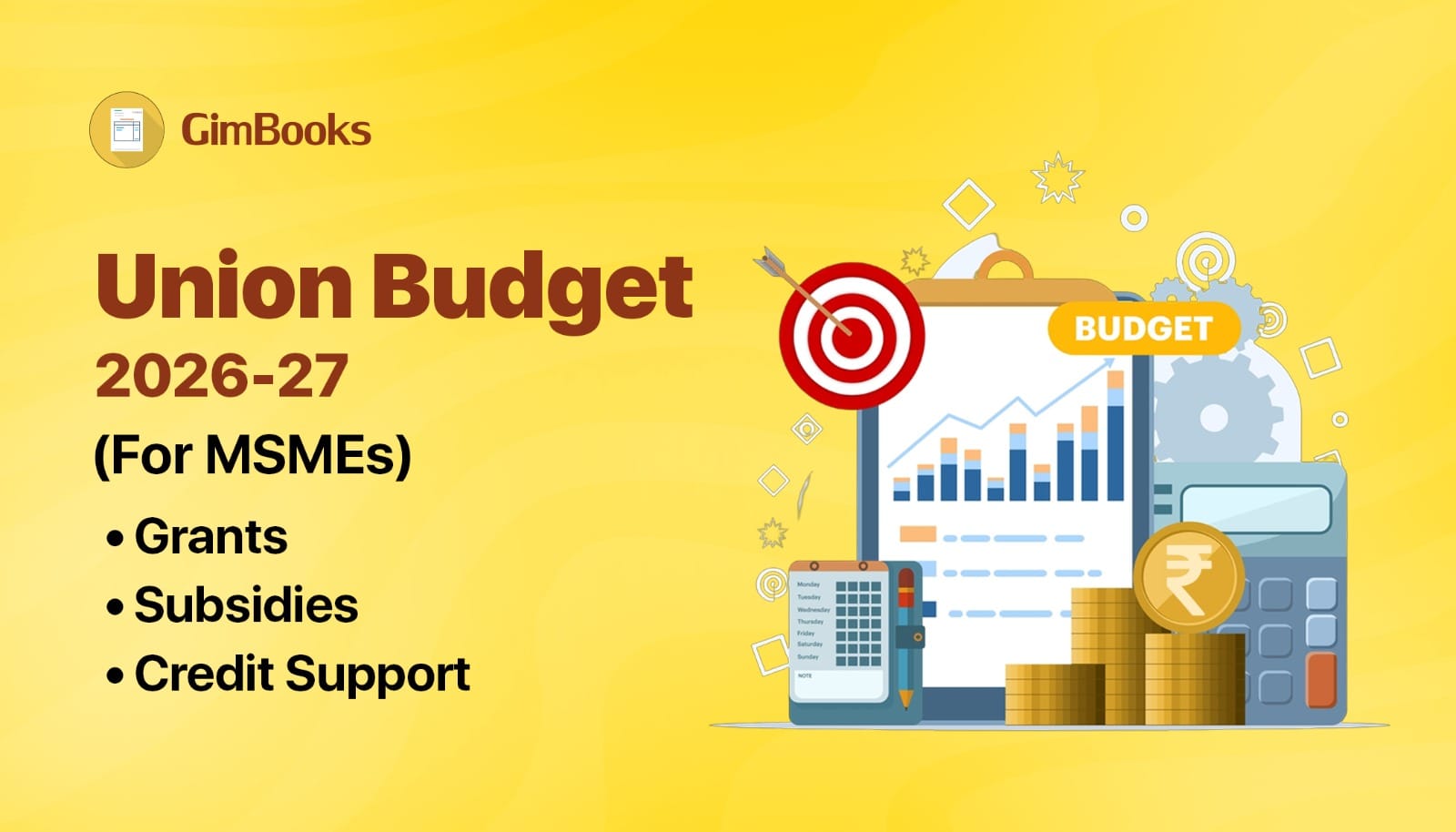
Union Budget 2026-27 puts a strong spotlight on grant support, credit guarantee schemes, interest subsidies, export incentives, and NBFC-linked financing options to strengthen India’s MSME ecosystem. The aim is to make MSME grants India 2026-27, budget subsidies for MSMEs, and MSME credit support easier to understand and use in real business terms.
Here’s a full breakdown of what the Budget introduced and how you can benefit.
1. Funds for MSME Growth
Budget 2026 now offers narrow loan support to broader capital access made for growth.
₹10,000 Crore SME Growth Fund:
A ₹10,000 crore corpus is allotted for the SME Growth Fund. It is equity-style capital that supports expansion, technology upgrades, and competitiveness for small enterprises.
₹2,000 Crore to Self-Reliant India Fund:
Micro firms and smaller enterprises receive an additional top-up to the existing Self-Reliant India Fund, enhancing access to risk capital that traditional lenders may not readily provide.
Why this matters:
These funds enable small businesses to invest in machinery, systems, and expansion plans without the pressure of loan repayment from the outset.
2. Stronger Credit Guarantee Coverage (CGTMSE)
One of the most practical changes is deepening the credit guarantee scheme, which removes barriers to bank lending.
- Higher Guarantee Limits.
- Micro and Small Enterprises: Guarantee cover raised to ₹10 crore (from ₹5 crore).
- Startups: Cover increased to ₹20 crore for focused sectors.
- Export-ready MSMEs: Guaranteed term loans up to ₹20 crore.
- Reduced Guarantee Fee: The fee charged on these guarantees has been cut significantly, making banks more willing to lend and lowering borrowing costs for businesses.
Union Budget Impact on MSME: MSME credit becomes easier because lenders face less risk. This especially helps businesses that need MSME credit budget 2026-27 support without collateral.
3. Liquidity & Working Capital Support via TReDS
Budget 2026 helps MSMEs get paid faster through TReDS. Government companies must now use TReDS when buying from MSMEs, which reduces payment delays.
It helps to access the working capital quickly.
It improves visibility for financiers by integrating government portals (like GeM) with TReDS.
Why this matters for MSMEs:
TREDs helps MSMEs get faster payments, leading to reduced cash flow stress and reliance on expensive short-term credit options.
4. Targeted Credit for Micro and First-Time Entrepreneurs
Budget 2026-27 includes new, inclusion-focused measures, like:
- Special credit schemes aimed at women, SC/ST, and first-time entrepreneurs with loans up to ₹2 crore.
- Customised credit cards with a ₹5 lakh limit for registered micro enterprises to support working capital needs.
These are excellent options for business owners who struggle to get traditional bank loans.
5. Interest Subvention and Priority Lending
The budget doesn’t exactly mention interest rates, but small businesses in areas like manufacturing and exports are likely to continue getting interest support. This means lower interest on loans, smaller EMIs, and better cash flow to make it easier for growing businesses to borrow and run their business operations.
6. Cluster Development & Export Support Funds
Grant and incentive schemes are aimed at promoting clusters and export value chains, such as:
- Mega textile parks, sector-specific clusters, and integrated industrial zones are being promoted to attract investment and reduce input costs.
- Export incentives include duty drawbacks, logistics support, and unified trade platforms, improving small business access to global markets.
It helps small businesses compete in global markets and get support for exporting goods.
7. NBFC Role & Fintech Integration
With Non-Banking Financial Companies' support, the government is increasing credit flow to MSMEs in the following ways:
- TReDS brings all invoices to one place, making it easy for NBFCs to fund them quickly.
- Fintech partnerships help small businesses get faster credit approvals and alternative financing routes.
This expands the credit ecosystem beyond traditional banks and supports business loans India's budget 2026 objectives.
Quick Table: Budget 2026-27 Support for MSMEs
| Support Area | Key Measure | Business Benefit |
|---|---|---|
| Grants & Growth Capital | SME Growth Fund (₹10,000 Cr) | Equity-style growth support |
| Risk Capital | Self-Reliant India Fund top-up | Liquidity for micro units |
| Credit Guarantees | CGTMSE limits ↑ to ₹10/₹20 Cr | Easier loans without collateral |
| Liquidity Tools | TReDS mandatory for CPSEs | Faster invoice payments |
| Inclusion Credit | Women/SC/ST targeted schemes | Better access for underserved groups |
| Micro-Enterprise Credit | Credit cards up to ₹5 lakh | Quick working capital |
| Export & Cluster Funds | Mega parks & export missions | Export subsidies + shared infrastructure |
Step-by-Step Guide to Access Budget 2026 Schemes
Step 1: Register as an MSME.
Get your Udyam registration; it helps in place - it’s the gateway to most government credit and support schemes.
Fill these Important GST forms before applying for schemes.
Step 2: Maintain Clean Financial Records.
Banks and lenders evaluate GST returns, invoices, and bank statements. Digital accounting helps here.
Explore: File GST returns on time by filing before these due dates in 2026.
Step 3: Approach Banks & NBFCs.
Ask specifically for credit guarantee loans or TReDS invoice financing from banks & NBFCs.
Step 4: Explore Specialised Funds.
Check if you qualify for the SME Growth Fund, women/SC/ST entrepreneur support, or micro-enterprise credit cards.
These steps help you leverage MSME grants India 2026-27 and budget subsidies.
How to Apply for Budget 2026 Credit, Grants & MSME Schemes
You don’t apply through one single form. Most Budget 2026 benefits are accessed through banks, NBFCs, or government portals. The process is straightforward:
Step 1: Get Your MSME (Udyam) Registration
This is non-negotiable.
- Visit the official Udyam portal
- Register using Aadhaar
- You’ll get an MSME certificate instantly
Most loans, credit guarantees, subsidies, and funds won’t move forward without this.
Step 2: Keep Your Business Records Ready
Banks and lenders now rely more on data than paperwork.
Make sure you have:
- GST returns filed on time.
- Sales invoices are properly recorded.
- Bank statements that reflect real business activity.
Organised records = faster scheme approvals.
Step 3: Approach the Right Channel
Depending on what you need:
- Collateral-free loans / Credit Guarantee Scheme
→ Visit your bank or NBFC and ask for CGTMSE-backed MSME loans.
- Invoice financing / Faster payments
→ Register on a TReDS platform through your bank.
- Growth funds or special schemes
→ Banks, SIDBI, or government-linked financial institutions guide you.
You don’t have to run to multiple offices. Most applications start at your bank.
Step 4: Apply Digitally
Many schemes now allow online submission, fewer physical visit, and faster tracking.
If your accounting records are digital, this step becomes much easier.
Which Budget 2026 Scheme Suits Your Business?
| Your Business Situation | Best-Fit Scheme (Budget 2026) | Why This Works for You |
|---|---|---|
| You run a small shop, service business, or micro unit | Credit Guarantee Scheme (CGTMSE) | Get loans without giving property or assets as security |
| You face cash flow issues due to late customer payments | TReDS Invoice Financing | Turn approved invoices into instant cash instead of waiting months |
| You want to expand, buy machinery, or upgrade systems | SME Growth Fund (₹10,000 crore) | Growth capital without immediate EMI pressure |
| You’re a first-time entrepreneur / woman / SC-ST founder | Targeted MSME Credit Schemes | Easier loan access with government backing |
| You need small, quick working capital | MSME Credit Card (up to ₹5 lakh) | Fast access to funds for daily business needs |
| You’re in manufacturing or exports | Interest Subvention + Export Incentives | Lower interest cost and better margins |
| You operate in a business cluster or industrial area | Cluster Development & Infrastructure Funds | Shared facilities, lower costs, better scale |
Simple rule:
If you need money to survive day-to-day, look at credit guarantees or TReDS.
If you need money to grow, explore growth funds and interest-supported loans.
Documents Required for Budget 2026 MSME Schemes
Most schemes ask for basic, standard documents. But you will need the following mandatory documents-
- Aadhaar (business owner / partner).
- PAN (individual or business).
- MSME (Udyam) registration certificate.
- Financial & Business Proof.
- GST registration and recent GST returns.
- Last 6–12 months bank statements.
- Basic financials (sales summary or P&L).
- Additional (Case-Specific).
- Loan application form from bank/NBFC.
- Export documents (only if applying for export support).
- Invoices (for TReDS or invoice financing).
That’s usually it.
Quick Tip for Faster Approval- Banks approve faster when invoices match GST returns.
Conclusion on Budget 2026
Budget 2026 is not about paperwork-heavy schemes. It’s about faster credit, easier loans, and smoother cash flow if your business records are in order.
What this really means is simple:
Banks now look beyond assets. They look at GST filings, invoices, and cash flow discipline. If your invoices don’t match GST, or your numbers are scattered, even the best schemes won’t help. But when records are organised, options like collateral-free loans, TReDS invoice financing, and interest-supported credit become much easier to access.
Many small businesses already use tools like GimBooks to:
- Keep invoices and GST in one place
- track receivables and payments
- Stay ready for audits, loans, or financing
Not to chase schemes, but to avoid last-minute stress when opportunities like Budget 2026 support come up.
Budget 2026 FAQs for Small Business Owners
Does the Union Budget 2026 really help small businesses get loans?
Yes. Budget 2026 makes it easier to get loans by allowing banks to lend without asking for collateral. This reduces rejection and speeds up approvals.
Can I get an MSME loan without property or security?
Yes. Under the Credit Guarantee Scheme, banks can give loans without property, land, or assets as security, especially for micro and small businesses.
How does Budget 2026 solve payment delays?
The budget pushes wider use of TReDS platforms. This allows businesses to convert approved invoices into quick cash instead of waiting 60–90 days for payment.
What is the SME Growth Fund in Budget 2026?
It’s a ₹10,000 crore fund that helps MSMEs grow without relying on short-term loans.
Are micro businesses and small shop owners included?
Yes. Micro enterprises benefit from credit guarantees, MSME credit cards, and easier access to formal loans under Budget 2026 schemes.
What documents do I need to apply for these schemes in union budget 2026?
Most banks ask for:
- Aadhaar and PAN
- MSME (Udyam) registration
- GST returns (if registered)
- Bank statements
That’s usually enough to start.
Do I need perfect accounts to apply?
No. But clean invoices, updated GST filings, and matching bank records make approvals much faster and smoother.
Where do I apply for Budget 2026 MSME schemes?
You apply through banks, NBFCs, or TReDS platforms, not directly through the budget website. Your bank is usually the first step.