
How to File GSTR-5 for Non-Resident Taxable Persons
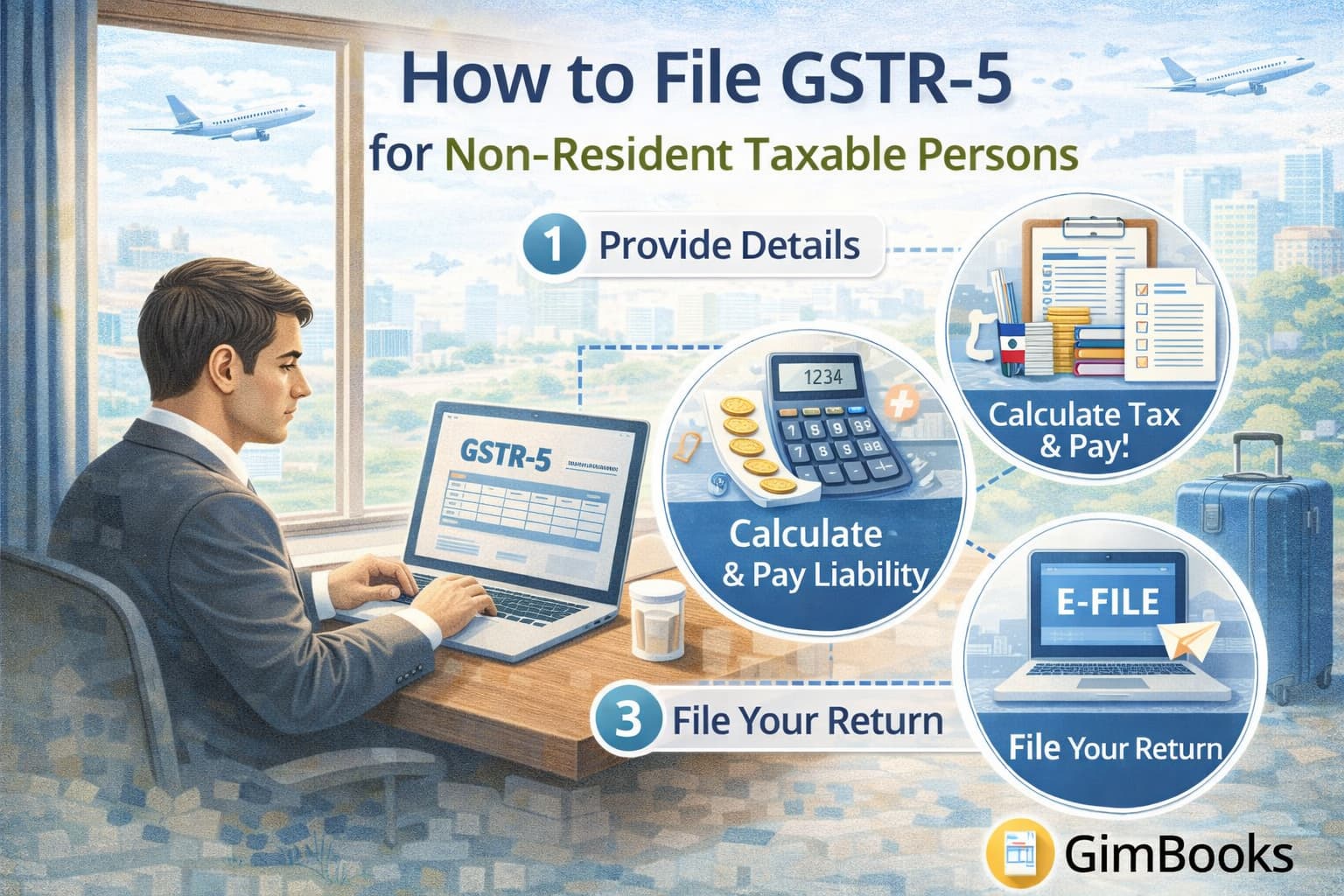
How to file GSTR-5 is a common question for non-resident business owners who supply goods or services in India. If you are a foreign business operating temporarily in India, you must understand the filing process to stay GST-compliant and avoid penalties.
India’s GST system has grown rapidly, with collections reaching an all-time high of ₹22.08 lakh crore in FY25, showing a 9.4% year-on-year growth, according to official government data.
This informative blog explains everything in simple terms. You will learn the GSTR-5 meaning, eligibility, due dates, and a step-by-step process to file your return without confusion.
What is GSTR-5?
GSTR-5 is a monthly GST return that must be filed by non-resident taxable persons (NRTPs) who do business in India.
A non-resident taxable person is someone who:
- Does not have a fixed place of business in India.
- Supplies goods or services occasionally.
- Is registered under GST for a limited period.
What details are included in GSTR-5?
This return captures:
- Details of outward supplies (sales).
- Details of inward supplies (purchases).
- Tax paid on these transactions.
- Closing stock and other related information.
In simple words, GSTR-5 helps the government track all business activities of non-resident taxpayers in India.
Who Should File GSTR-5?
You must file GSTR-5 if:
- You are a foreign individual or business supplying goods/services in India.
- You have taken temporary GST registration as a non-resident taxpayer.
Who does NOT need to file it?
- Regular GST-registered businesses in India.
- Input Service Distributors.
- Composition scheme taxpayers.
GSTR-5 Due Date You Should Know
Understanding the GSTR-5 due date is very important to avoid late fees.
- The return must be filed within 13 days after the end of the month.
- OR within 7 days after your GST registration expires, whichever is earlier.
Example:
- If you operate in India during April, your GSTR-5 due date is May 13.
- If your registration ends on April 25, you must file by May 2.
Why Filing GSTR-5 is Important
Filing GSTR-5 on time helps you:
- Stay compliant with GST laws.
- Avoid penalties and interest.
- Maintain a clean business record in India.
Missing the return can lead to:
- Late fees.
- Legal complications.
- Trouble in future business registrations.
Documents Required Before You File
Before you learn how to file GSTR-5, keep these details ready:
- GSTIN (GST Identification Number).
- Details of sales (invoices issued).
- Purchase invoices.
- Credit or debit notes (if any).
- Tax payment details.
- Bank account details.
Having these ready will make the process smooth and fast.
Step-by-Step Process: How to File GSTR-5
Here is a simple step-by-step guide on how to file GSTR-5:
Step 1: Log in to the GST Portal
Go to the official GST portal and log in using your credentials.
Step 2: Navigate to Returns Dashboard
- Click on “Services”
- Select “Returns”
- Click on “Returns Dashboard”
Choose the relevant month for filing GSTR-5.
Step 3: Select GSTR-5
You will see different return options. Click on GSTR-5.
Step 4: Enter Outward Supply Details
Add details of:
- Sales made during the period.
- Invoice-wise data.
- Tax amounts.
Step 5: Enter Inward Supply Details
Provide:
- Purchase details.
- Tax paid on purchases.
Step 6: Add Debit/Credit Notes
If you have issued or received:
- Debit notes
- Credit notes
Enter them carefully.
Step 7: Verify Tax Liability
The system will calculate:
- Total tax payable
- Interest (if any)
Check all details before moving ahead.
Step 8: Pay Tax
Make the payment using:
- Net banking
- Debit/credit card
- Other available methods
Step 9: Submit the Return
Click on “Submit” after verifying all data.
Step 10: File Using DSC or EVC
Finally, file your return using:
- Digital Signature Certificate (DSC), or
- Electronic Verification Code (EVC)
Once done, you will receive an acknowledgment.
Key Sections in GSTR-5 Explained
To understand how to file GSTR-5 better, let’s look at its main sections:
1. Taxpayer Details
Basic details like:
- GSTIN
- Legal name
- Trade name
2. Outward Supplies
Includes:
- Sales made to registered and unregistered persons.
- Export details.
3. Inward Supplies
Details of:
- Purchases made within India.
- Imports
4. Tax Payable and Paid
Shows:
- Total tax liability.
- Tax already paid.
5. Closing Stock
Details of stock held at the end of the registration period.
Late Fees and Penalties
If you miss the GSTR-5 due date, you will have to pay:
- ₹50 per day (₹25 CGST + ₹25 SGST).
- ₹20 per day for nil return.
Maximum penalty
- ₹5,000
Interest is also charged on unpaid tax.
Common Mistakes to Avoid
While learning how to file GSTR-5, avoid these common errors:
- Entering wrong invoice details.
- Missing purchase entries.
- Filing after the due date.
- Not verifying tax calculations.
- Forgetting to file after registration expiry.
Double-checking your return can save you from penalties.
Tips for Easy GSTR-5 Filing
Here are some simple tips:
- Keep all invoices organized.
- Track transactions regularly.
- File before the deadline.
- Use reliable GST software.
- Review data before submission.
How GimBooks Helps You File GST Returns Easily
Managing GST returns manually can be confusing, especially for small and micro-sized businesses. This is where GimBooks can help.
GimBooks is a cloud-based and mobile-first accounting platform designed for businesses in India and the Middle East. It started as a simple invoice maker and has now become a complete GST-compliant accounting solution.
Key Benefits of Using GimBooks
- Easy invoice creation.
- GST-compliant bookkeeping.
- Simple return tracking.
- Mobile-friendly interface.
- Affordable for small businesses.
With tools like GimBooks, you can manage your records properly, which makes filing returns like GSTR-5 much easier.
In Closing
Understanding how to file GSTR-5 is important for any non-resident taxable person doing business in India. This return ensures that all your transactions are reported correctly and taxes are paid on time.
To recap:
- Know the GSTR-5 meaning and who should file it.
- Always track the GSTR-5 due date.
- Follow the correct steps to file your return.
- Avoid mistakes and penalties.
With the right approach and tools, filing GSTR-5 can be simple and stress-free.
To know more, explore the GimBooks expert blog section!
Related
How to File GSTR-4 for Composition Taxpayers
How to File GSTR 3B Online Without Errors
How to File GSTR 2B and Understand Input Tax Credit
How to File GSTR 1 Online: Complete Return Filing Guide
Frequently Asked Questions (FAQs)
1. What is GSTR-5, and who needs to file it?
GSTR-5 is a monthly GST return filed by non-resident taxable persons who supply goods or services in India. It is mandatory for foreign businesses registered under GST for a limited time.
2. What is the GSTR-5 due date?
The GSTR-5 due date is within 13 days after the end of the month or within 7 days after the expiry of GST registration, whichever is earlier.
3. Can I revise GSTR-5 after filing?
No, you cannot revise GSTR-5 once it is filed. If there are mistakes, you must correct them in the next return.
4. What happens if I miss filing GSTR-5?
If you miss the deadline, you will have to pay late fees and interest. The late fee is ₹50 per day (₹20 per day for nil returns), up to a maximum limit.
5. Is GSTR-5 required even if there are no transactions?
Yes, you must file a nil GSTR-5 return even if there are no transactions during the period, as long as your GST registration is active.