How Billing Software Automatically Generates E-Way Bills
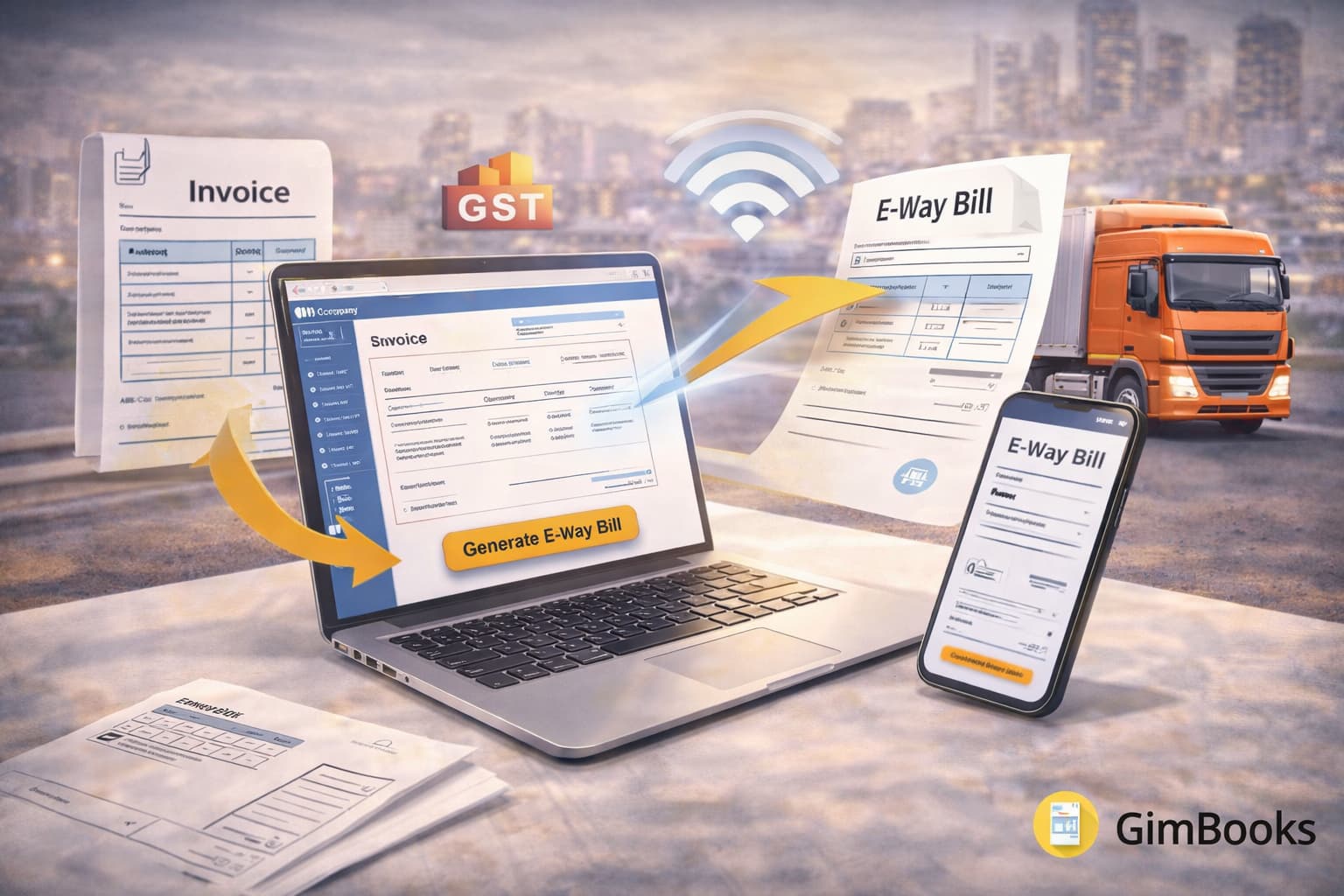
Goods movement under the Goods and Services Tax (GST) system requires proper documentation. Among the most important documents is the E-Way Bill, a digital permit that tracks the transportation of goods across India. For many small businesses, manually creating these documents can slow down operations and increase the risk of compliance errors.
Modern GST billing software with e-way bill integration solves this problem by automating the entire process—from invoice creation to E-Way Bill generation. Businesses can now produce transport documentation directly from invoices within seconds, improving accuracy and saving valuable time.
This article explains how billing software with e-way bill generation works, why automation matters for GST compliance, and how tools like GimBooks help businesses generate E-Way Bills with minimal effort.
What Is an E-Way Bill in GST?
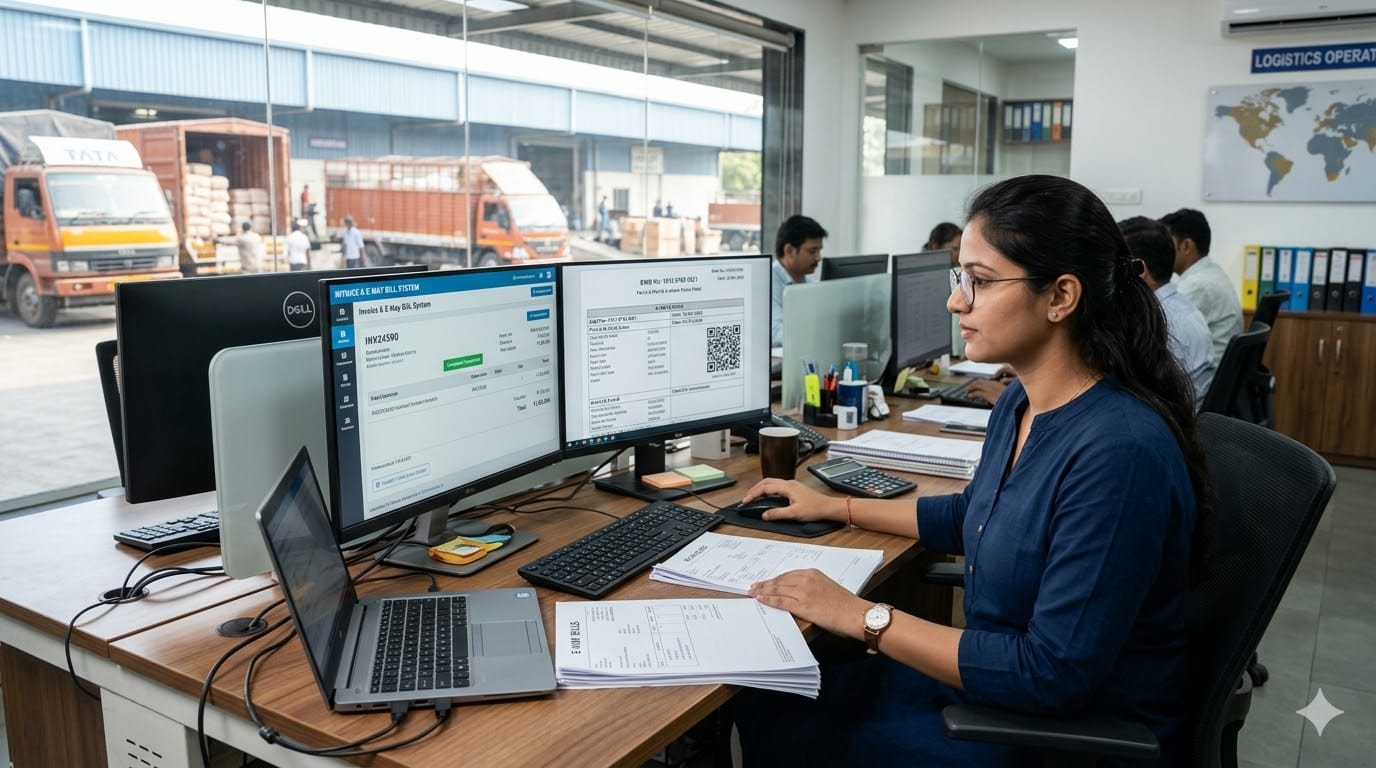
An E-Way Bill (Electronic Way Bill) is a document required when goods valued above ₹50,000 are transported from one place to another. It is generated through the GST E-Way Bill system and includes details about:
- Supplier and recipient
- Invoice or challan number
- Value of goods
- HSN codes
- Transporter details
- Vehicle number
The document is mandatory for both interstate and intrastate transportation in most cases.
Businesses traditionally generate E-Way Bills manually by entering details into the GST portal. However, this process becomes difficult when businesses handle large volumes of invoices every day.
That is why companies increasingly rely on e-way bill software in India that integrates invoicing and compliance tasks.
Challenges of Manual E-Way Bill Generation
Before automation tools became common, businesses often faced several operational challenges.
1. Repetitive Data Entry
Users had to manually enter the same information twice—once while generating the invoice and again when creating the E-Way Bill.
2. Higher Risk of Errors
Incorrect vehicle numbers, mismatched invoice details, or wrong HSN codes could lead to penalties or shipment delays.
3. Time-Consuming Compliance
Businesses handling hundreds of shipments daily spent hours uploading information to the portal.
4. Transport Delays
Incomplete documentation could stop vehicles at checkpoints, affecting delivery timelines and customer relationships.
These limitations encouraged businesses to adopt automatic e-way bill generation through integrated billing platforms.
What Is Automatic E-Way Bill Generation?
Automatic e-way bill generation refers to the process where billing or accounting software automatically creates the E-Way Bill as soon as a GST invoice is generated.
Instead of entering the same information repeatedly, the software pulls data directly from the invoice and submits it to the GST portal through secure API integration.
The result is a faster, error-free, and fully compliant system for managing goods transportation.
How Billing Software Generates E-Way Bills Automatically
The automation process is quite straightforward when businesses use GST compliance software designed for integrated invoicing.
Below is the typical workflow.
1. Invoice Creation
The process begins when a business generates a GST invoice using cloud billing software in India.
The invoice already includes key details such as:
- Supplier GSTIN
- Customer GSTIN
- Product description
- HSN code
- Quantity and value
- Tax breakdown
Since all information is already stored in the system, there is no need to enter it again.
2. Selecting Transport Details
Before generating the E-Way Bill, the user simply enters basic transport information:
- Mode of transport (road, rail, air, ship)
- Vehicle number or transporter ID
- Approximate distance
These are the only additional details required.
3. Automatic Data Extraction from the Invoice
Once the transport details are entered, the software automatically extracts invoice data required for the invoice to e-way bill generation process.
The system gathers information such as:
- Invoice number and date
- GSTIN of supplier and recipient
- Product value and tax amount
- HSN codes and item description
This eliminates the need for manual entry on the GST portal.
4. Direct Integration with the GST E-Way Bill Portal
Advanced e-way bill software in India connects directly with the government portal through API integration.
The software sends invoice data securely to the portal, where the system validates the details and generates the E-Way Bill.
Within seconds, businesses receive:
- E-Way Bill number (EBN)
- QR code
- Transport document
This entire process happens inside the billing software interface.
5. E-Way Bill Attached to the Invoice
After generation, the E-Way Bill number is automatically linked to the original invoice.
Businesses can then:
- Download the E-Way Bill
- Print it with the invoice
- Share it digitally with transporters
This simplifies documentation for e-way bill for transport of goods.
Benefits of Using Billing Software for E-Way Bill Generation
Automation provides practical advantages for businesses handling regular shipments.
Faster Documentation
Instead of spending several minutes per shipment, businesses can generate e-way bill from invoice in seconds.
This significantly improves operational efficiency.
Reduced Compliance Errors
Since data is automatically transferred from invoices, the chances of:
- incorrect GSTIN
- mismatched invoice values
- wrong HSN codes
are drastically reduced.
This helps businesses stay aligned with GST regulations.
Improved Transport Efficiency
Transporters receive the E-Way Bill immediately after invoice generation, allowing shipments to move without delay.
Better Record Management
Billing software stores all invoices and E-Way Bills in a single dashboard.
This makes it easier to:
- track shipments
- retrieve documents
- manage GST audits
Suitable for Growing Businesses
As businesses scale, shipment volumes increase. Automation ensures compliance without increasing administrative workload.
This is especially useful for accounting software for small businesses that want to expand operations.
How GimBooks Simplifies E-Way Bill Automation
Businesses looking for a simple and efficient system can use GimBooks, which offers built-in billing software e-way bill generation.
The platform allows businesses to create invoices and generate E-Way Bills in one seamless workflow.
Key capabilities include:
One-Click E-Way Bill Generation
Users can instantly create an E-Way Bill directly from the invoice without visiting the GST portal.
Integrated GST Invoicing
Invoices automatically include tax calculations, HSN codes, and GST details needed for compliance.
Cloud-Based Access
As a cloud billing software in India, the platform can be accessed from any device, allowing businesses to manage shipments from office or on the move.
Secure GST Portal Integration
The software connects directly with the government E-Way Bill system, ensuring accurate and compliant submissions.
Who Should Use Billing Software with E-Way Bill Automation?
Automation tools are valuable across many industries that transport goods frequently.
Retailers and Wholesalers
Businesses shipping inventory across cities benefit from faster documentation.
Manufacturers
Manufacturers transporting raw materials and finished goods require accurate GST records.
Transporters and Logistics Operators
Transport companies can track shipments and access documents quickly.
Small Businesses
Startups and growing companies can manage compliance without hiring large accounting teams.
Using GST billing software with e-way bill integration helps these businesses maintain operational speed while remaining compliant.
Best Practices for Using E-Way Bill Automation
Even with automation tools, businesses should follow certain practices to maintain accuracy.
Maintain Accurate Product Data
Ensure HSN codes, product descriptions, and GST rates are correctly configured in the software.
Verify Transport Details
Vehicle numbers and transporter IDs must be accurate to avoid transit issues.
Monitor Validity Periods
E-Way Bills have validity limits based on distance. Businesses should track expiration to prevent shipment disruptions.
Store Digital Records
Maintain digital copies of invoices and E-Way Bills for audits and GST filing.
Modern GST compliance software usually includes built-in reporting features to manage these tasks.
Explore and download - E-waybill Format
The Future of E-Way Bill Automation
The GST ecosystem continues to move toward deeper digital integration.
Upcoming developments may include:
- expanded API integrations
- faster portal processing
- AI-driven compliance validation
- deeper ERP integrations
As regulations evolve, businesses that rely on automatic e-way bill generation will adapt more easily than those using manual systems.
Automation will likely become a standard feature in all professional e-way bill software in India.
Related - 2026 E-Way Bill Updates for: Transporters, Traders, and Manufacturers.
Conclusion
E-Way Bills are a critical part of GST compliance for businesses transporting goods. While manual generation can be time-consuming and prone to errors, modern billing platforms simplify the process through automation.
By using GST billing software with e-way bill capabilities, businesses can generate transport documents directly from invoices, reduce compliance risks, and streamline operations.
Solutions like GimBooks make this process even easier by allowing users to create invoices and generate E-Way Bills in just one click.
For businesses looking to simplify compliance and improve shipment efficiency, exploring automated E-Way Bill tools is a practical step toward smarter GST management.
Explore and generate automated E-Way Bill
Frequently Asked Questions (FAQs)
What is an E-Way Bill and when is it required under GST?
An E-Way Bill is an electronic document generated through the GST E-Way Bill system for the movement of goods. It is generally required when the value of goods being transported exceeds ₹50,000. The bill contains details such as supplier information, recipient GSTIN, invoice number, goods description, and transporter details.
Businesses involved in manufacturing, wholesale distribution, or retail shipments must generate an e-way bill for transport of goods to remain compliant with GST regulations.
Can billing software generate E-Way Bills automatically?
Yes. Modern GST billing software with e-way bill integration can generate E-Way Bills automatically once a GST invoice is created. The software extracts the necessary data from the invoice—such as GSTIN, invoice value, HSN code, and product details—and submits it to the government portal through secure API integration.
This process enables automatic e-way bill generation, reducing manual work and minimizing compliance errors.
How do you generate an E-Way Bill directly from an invoice?
With integrated billing software, the process is simple:
- Create a GST invoice in the software
- Enter transporter details such as vehicle number or transporter ID
- Select the option to generate e-way bill from invoice
- The system automatically sends invoice data to the GST portal
- The E-Way Bill number is generated and attached to the invoice
Platforms like GimBooks allow businesses to complete this process in a single step.
Who needs E-Way Bill software in India?
E-way bill software in India is useful for businesses that frequently transport goods, including:
- Retailers shipping products to customers
- Wholesalers distributing inventory to multiple locations
- Manufacturers transporting raw materials and finished goods
- Transporters handling logistics operations
These businesses benefit from faster documentation and improved compliance through e-way bill automation.
Is E-Way Bill generation possible using cloud billing software?
Yes. Most modern cloud billing software in India includes built-in E-Way Bill integration. Because the system operates online, businesses can generate invoices and E-Way Bills from any device with internet access.
Cloud-based platforms also store records automatically, making it easier to manage GST documentation, track shipments, and access historical invoices during audits.
What are the advantages of using GST billing software with E-Way Bill automation?
Using GST compliance software with E-Way Bill automation provides several operational benefits:
- Faster invoice-to-E-Way Bill processing
- Reduced risk of data entry errors
- Simplified GST compliance
- Better document management
- Improved shipment efficiency
Tools like GimBooks combine invoicing, accounting, and E-Way Bill generation in one system, making them especially useful for small and growing businesses that want to streamline operations.