
GST New Rules from 1 April 2026: Guide for Indian Small Businesses
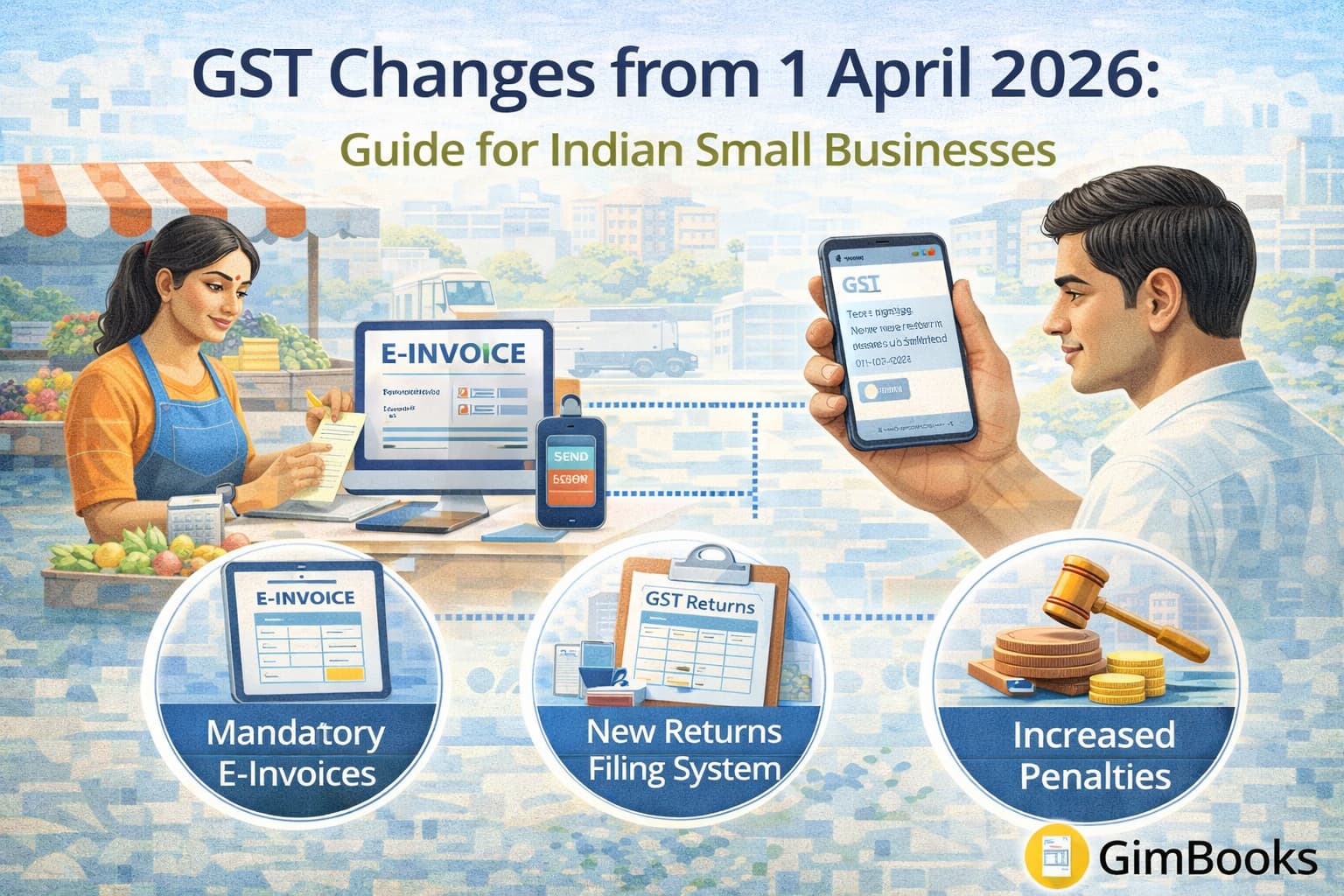
Overview of GST Changes April 2026
The gst changes from 1 april 2026 introduce several compliance updates that directly affect how small businesses manage invoicing, returns, and tax credits. These updates are part of ongoing efforts to improve transparency, reduce fraud, and standardize GST processes across India.
For small business owners and accountants, understanding these gst updates april 2026 is not optional—it is essential for avoiding penalties and maintaining smooth operations. Whether you are a service provider, exporter, or trader, these changes influence daily financial activities.
This guide explains the gst changes april 2026 in a practical way, focusing on what they mean and how to stay compliant.
Key GST Changes from 1 April 2026
LUT Filing for FY 2026-27
What the rule is: Businesses exporting goods or services without paying IGST must file a Letter of Undertaking (LUT) for the financial year 2026–27.
Why it matters: Without LUT filing, exporters are required to pay IGST upfront and later claim a refund, which affects cash flow.
Practical example: A small IT service exporter must submit LUT before starting exports in April 2026. Missing this step means paying tax first and waiting for refunds, which can block working capital.
GST Export Refund Changes 2026
What the rule is: The gst export refund changes 2026 focus on stricter validation and removal of certain refund thresholds.
Why it matters: Refund claims will now require better documentation and accurate invoice matching.
Practical example: If a business exports goods and files for refunds, mismatched invoice details between GST returns and shipping bills can delay refunds significantly.
New Invoice Series for Financial Year
What the rule is: Businesses must start a fresh gst invoice series new financial year from April 1, 2026.
Why it matters: This helps maintain clear records and prevents duplication or confusion in audit trails.
Practical example: If your last invoice in March 2026 was INV-2025-999, you must begin April with a new format like INV-2026-001.
e-Invoicing Threshold Update (₹5 Crore Limit)
What the rule is: The gst e invoicing threshold 2026 mandates e-invoicing for businesses with turnover exceeding ₹5 crore.
Why it matters: More small businesses now fall under e-invoicing compliance.
Practical example: A business with ₹6 crore turnover must generate invoices through the GST portal system. Manual invoices will not be valid for compliance.
ECRS and ITC Reversal Rules
What the rule is: Introduction of systems like ecrs gst portal and updates in gst itc reversal rules 2026 improve tracking of input tax credit (ITC).
Why it matters: Incorrect ITC claims can lead to penalties and reversal with interest.
Practical example: If a supplier fails to upload invoices, the buyer may lose ITC and must reverse the claimed credit.
GTA Forward Charge Mechanism Changes
What the rule is: Under gta gst forward charge 2026, transport agencies may opt to pay GST themselves instead of the recipient.
Why it matters: This changes how businesses account for transport expenses and GST liability.
Practical example: Earlier, a business receiving transport services paid GST under reverse charge. Now, if the transporter opts for forward charge, the responsibility shifts.
GST Rule 14A Changes
What the rule is: The gst rule 14a changes focus on automated recovery of excess ITC claimed.
Why it matters: Authorities can recover wrongly claimed ITC directly from electronic credit ledgers.
Practical example: If excess ITC is detected, the system may auto-adjust it without manual intervention, impacting available credit.
Impact of GST Changes on Small Businesses
Compliance Burden
These gst amendments 2026 increase reporting requirements:
- More frequent reconciliations
- Accurate invoice matching
- System-based validations
Small businesses without proper systems may struggle to keep up.
Cash Flow Impact
- Delayed refunds can block funds
- ITC reversals affect working capital
- Advance tax payments may increase
Risk of Penalties
Non-compliance with gst rule changes 2026 can result in:
- Late fees
- Interest on unpaid tax
- Suspension of GST registration
Real-Life Scenario
A small manufacturer with ₹5.5 crore turnover:
- Must adopt e-invoicing
- Needs accurate ITC tracking
- Must reset invoice series
Failure in any of these can trigger notices or penalties.
GST Compliance Checklist April 2026
To manage gst compliance april 2026, follow this checklist:
- File LUT for FY 2026-27 (if exporting)
- Start a new invoice series from April 1
- Check if e-invoicing applies to your turnover
- Reconcile ITC with supplier filings
- Verify refund documentation before filing
- Update accounting software for new rules
- Track GTA transactions (forward/reverse charge)
- Monitor ITC reversals under Rule 14A
Step-by-step approach:
- Review turnover and applicability
- Update billing system
- Train staff or accountant
- Perform monthly reconciliation
- File returns on time
Common Mistakes to Avoid
Many businesses struggle with recent gst changes 2026 due to avoidable errors:
- Missing LUT filing before exports
- Continuing old invoice series
- Delays in e-invoice generation
- Claiming ITC without supplier confirmation
- Ignoring automated ITC reversal alerts
These mistakes often lead to compliance notices.
Simplify GST Compliance with GimBooks
Managing gst changes for small businesses 2026 can be complex without the right tools. This is where GimBooks becomes useful for daily operations.
GimBooks helps businesses handle:
- GST billing & invoicing with compliant formats
- e-invoicing integration for eligible businesses
- GST return filing with structured data
- Expense tracking for better financial control
The platform focuses on simplicity and automation, reducing manual errors and saving time for business owners.
Instead of managing multiple spreadsheets and tools, businesses can centralize operations and stay aligned with gst latest updates 2026.
Start managing your GST compliance effortlessly with GimBooks and reduce the risk of errors in daily operations.
Conclusion
The gst changes from 1 april 2026 reflect a shift toward stricter compliance and digital tracking. While these updates improve transparency, they also demand better systems and discipline from businesses.
Key takeaways:
- E-invoicing now applies to more businesses
- ITC rules are more tightly controlled
- Refund processes require accuracy
- Compliance errors can directly impact cash flow
For small businesses, the focus should be on preparation rather than reaction. By understanding these gst updates april 2026 and adopting the right processes, businesses can avoid penalties and maintain stability.
A structured approach to compliance is no longer optional—it is part of sustainable business operations in India.
FAQs on GST Changes 2026
1. What are GST changes from April 2026?
The gst changes 2026 india include updates in e-invoicing thresholds, ITC rules, export refunds, and compliance processes.
2. What is new in GST 2026?
Key updates include ₹5 crore e-invoicing applicability, automated ITC reversal, and stricter refund validation.
3. How do GST changes affect small businesses?
They increase compliance requirements, impact cash flow, and require better record-keeping systems.
4. What is the new e-invoicing limit?
The e invoice gst 5 crore limit means businesses above ₹5 crore turnover must follow e-invoicing.
5. What is LUT filing in GST?
LUT filing allows exporters to supply goods/services without paying IGST, improving cash flow.